


Snapshot
What happened
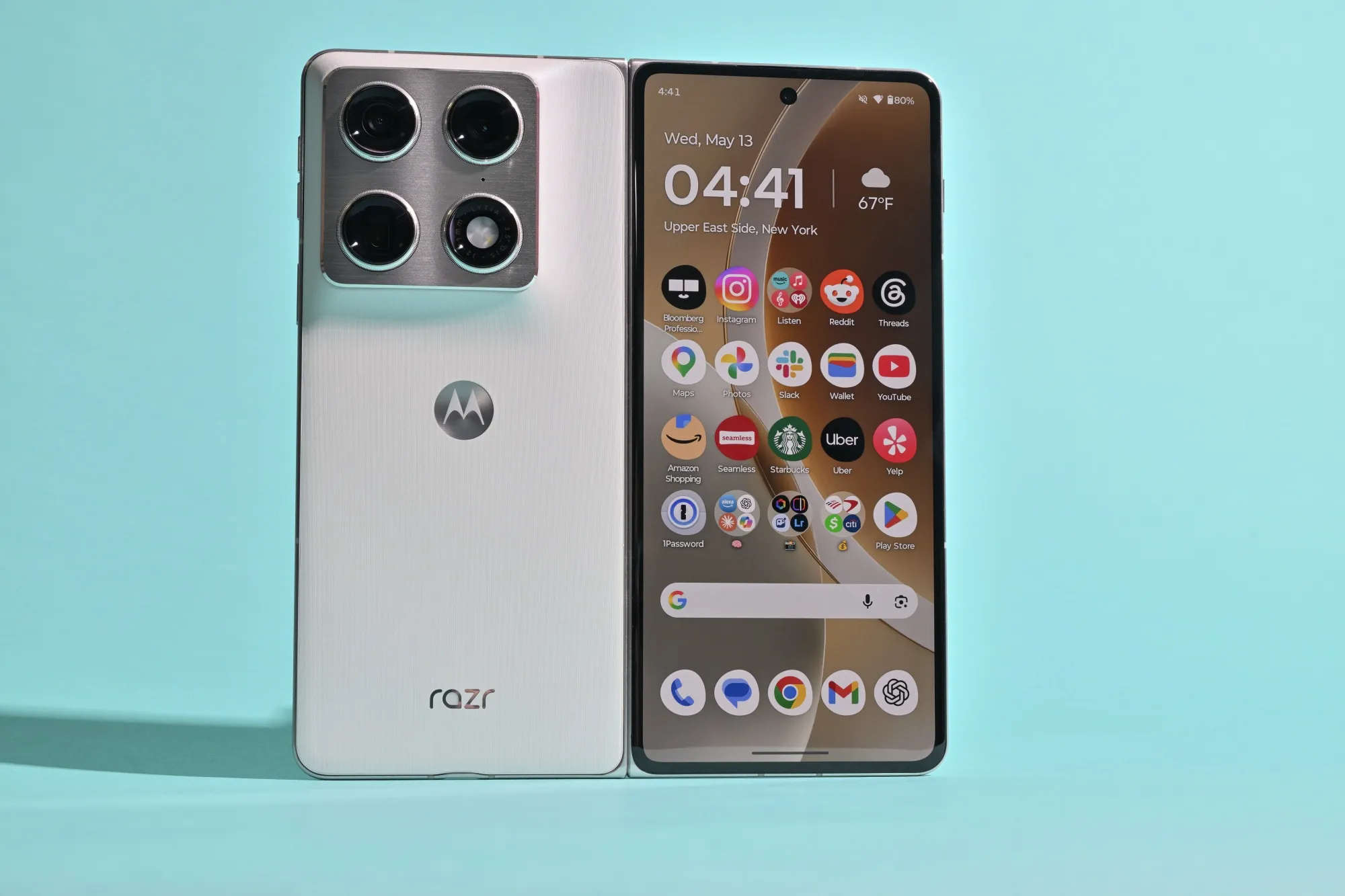
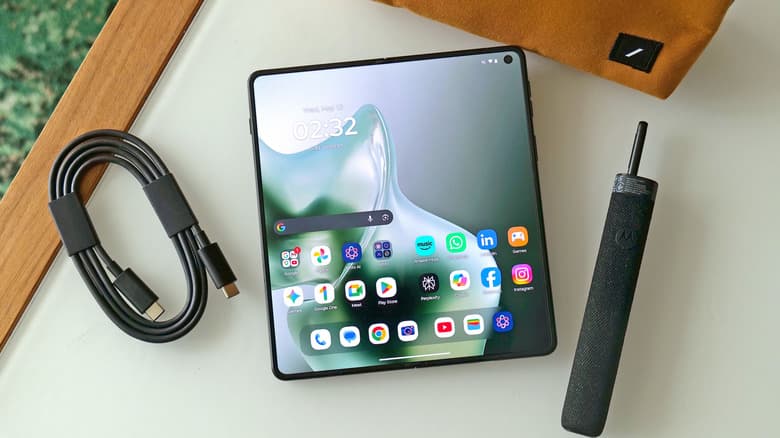
- Motorola has launched its first tablet-style foldable phone, the Razr Fold, entering a market previously dominated by Samsung and Google.
- The new device is priced at approximately $1,900, positioning it as a premium offering in the high-end smartphone segment.
- Reviewers have conducted hands-on tests, evaluating its design, performance, battery life, and comparing it to existing foldable competitors.
- The Razr Fold features a 6,000mAh silicon-carbon battery, which reviewers highlight as a significant advantage for daily use.
Why it matters
Competing interpretations
Some reviewers interpret the Razr Fold as a surprisingly strong first-generation product, even calling it potentially the 'best foldable' due to its battery life and hardware polish. Others view it as 'stuck in the middle,' a device with excellent features but too many 'rough edges' and compromises to justify its premium price, especially when compared to more refined rivals.
Where disagreement lives
Disagreement primarily lives in the subjective assessment of the Razr Fold's overall value proposition relative to its high price and its competitors. While technical specifications are largely agreed upon, reviewers diverge on whether its strengths (battery, hinge) outweigh its weaknesses (durability rating, camera, design quirks, cost).
What's still uncertain
The long-term durability of the silicon-carbon battery technology and its degradation rate is not yet established. The actual market adoption and sales figures for the Razr Fold remain unknown, as does Motorola's long-term software update commitment for this new form factor. Repairability and the cost of potential screen or hinge replacements are also unclear.
Who Is Affected
Early Adopters/Tech Enthusiasts
Access to cutting-edge technology with notable advantages in battery life, but at a high financial cost and potential risks regarding long-term durability.
Motorola (Company)
Opportunity to expand market presence in a growing premium segment, but faces significant financial and reputational risks if the product fails to meet expectations or gain traction.
Competitors (Samsung, Google)
Increased competitive pressure to innovate and differentiate their foldable offerings, particularly in battery performance and hinge design.
Human stakes
For consumers, the Motorola Razr Fold represents a choice at the bleeding edge of smartphone technology, offering novel form factors and impressive battery life at a significant financial outlay. It forces a trade-off between the allure of innovation and the practical concerns of durability, long-term support, and cost. This product launch reflects the ongoing quest for convenience and advanced capabilities in daily digital life, but also highlights the economic barriers to accessing such cutting-edge tools.
Source spectrum
Issue intelligence
Judgments for navigating this story—not scores. Expand tooltips on each chip for rationale.
Note. Evidence confidence is about factual solidity; uncertainty is about how open-ended outcomes still are. Both can be high at once.
Plausible paths forward
Our assessment
Structural read
The Motorola Razr Fold represents a strategic entry into the book-style foldable market, showcasing impressive hardware engineering, particularly its battery and hinge. However, its premium pricing and specific design compromises, such as the IP49 rating and camera bump, highlight the inherent trade-offs in pushing innovative form factors. This product tests the market's willingness to prioritize cutting-edge features over established durability and value, reflecting a broader industry challenge in balancing innovation with practical user needs.
Source reliability
Source reliability (7)
- Ars Technicaexpert · commentary · primary reporting
Ars Technica is a reputable technology publication known for in-depth reviews and analysis. Its reporting is based on hands-on testing and technical specifications, providing a detailed perspective on product performance and design. Readers should calibrate for the technical focus and the inherent subjectivity in product experience assessments.
- Engadgetexpert · commentary · primary reporting
Engadget is a technology news and review site. Its reporting role is to provide hands-on reviews and analysis of consumer electronics. Sourcing transparency is generally high, as reviews are based on direct product interaction and often attributed to specific reviewers. Readers should calibrate that reviews are subjective to some extent, even when based on objective testing, and reflect the reviewer's experience and preferences.
- The Vergeexpert · commentary · primary reporting
This article is a product review by a senior tech reviewer with over a decade of experience. Readers should calibrate for the reviewer's personal experience and evaluative judgments based on direct product testing and comparisons to market competitors.
- 9to5Googleexpert · commentary · primary reporting
This article is a first-impressions review based on one individual's week-long use of a pre-release product. Readers should calibrate that the claims are subjective, based on limited testing time, and may not reflect long-term durability or a broader user experience. The author explicitly states the claims are primarily for the US market.
- CNETexpert · commentary · primary reporting
CNET provides expert product reviews based on hands-on testing by its staff, leveraging decades of experience. Readers should note that while technical specifications are factual, assessments of user experience and design elements contain subjective reviewer preferences.
- TechRadarexpert · commentary · primary reporting
TechRadar is a technology review site that conducts hands-on testing of products. They transparently state their testing methodology, providing readers with a clear understanding of how their product assessments are formed.
- ZDNETexpert · commentary · commentary
ZDNET provides technology news and product reviews. This article is a hands-on comparison and review by a named author, focusing on technical specifications and user experience. Readers should note that some assessments, while based on experience, contain subjective elements.
Incentives
Stated goals vs plausible private incentives—evidence strength is an analytic judgment, not proof of bad faith.
| Actor | Stated goal | Likely private incentive | Evidence |
|---|---|---|---|
| Motorola | To compete in the premium book-style foldable market and expand its Razr brand beyond flip phones. | Increase market share, drive revenue, enhance brand perception as an innovator, and challenge established rivals like Samsung and Google. | strong |
| Technology Reviewers/Outlets | To provide comprehensive, unbiased reviews and comparisons of new consumer electronics. | Generate traffic, maintain credibility with readers, influence consumer purchasing decisions, and secure early access to future products. | strong |
Second-order effects
Increased pressure on Samsung and Google to innovate in battery technology and hinge design to match Motorola's advancements.
Probability: medium · Horizon: short · Affected: smartphone manufacturers, tech enthusiasts
Acceleration of silicon-carbon battery adoption across the broader smartphone industry due to Motorola's successful implementation.
Probability: medium · Horizon: medium · Affected: battery manufacturers, consumers, environmental advocates (due to potential material changes)
Temporal signal
How the signal travels in time: noise versus structure, and how long institutions may remember it.
- Significance
- structural shift
- Durability
- months
- Institutional memory
- low
The entry of a new major player into the book-style foldable market, coupled with innovative battery technology, represents a structural shift in the competitive landscape, though its immediate impact is tied to the product's short lifecycle.
Related News


Comments
Revisions(1)
I used the Motorola Razr Fold for a week, and I think it's the best foldable*
CurrentCognition tier backfill (compression + gated deep/civilizational fields)