

Snapshot
What happened
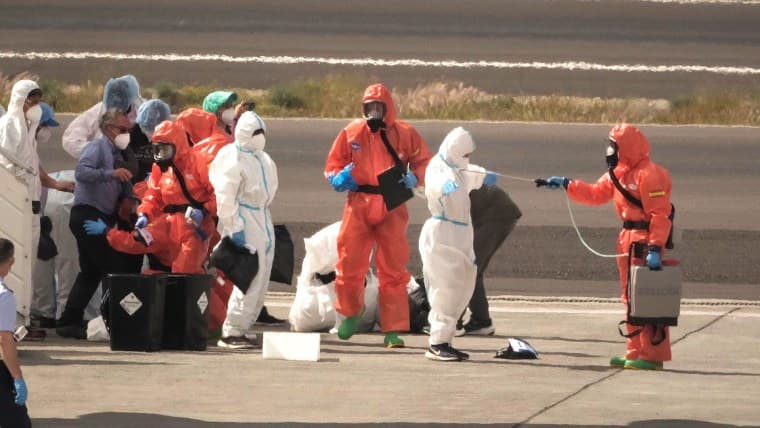
- As of May 14, 2026, 41 individuals across the United States are being monitored for hantavirus exposure linked to an outbreak on the MV Hondius cruise ship.
- No confirmed hantavirus cases related to this outbreak have been identified in the United States, and the risk to the general public is assessed as low to extremely low by health authorities.
- Globally, the World Health Organization has reported 11 total hantavirus cases and three deaths associated with the cruise ship outbreak.
- The Andes strain of hantavirus, involved in this outbreak, is unique among hantaviruses for its ability to spread human-to-human, though it does not do so easily.
Why it matters
Competing interpretations
Public health authorities interpret the current situation as a contained, low-risk event effectively managed through collaborative monitoring, demonstrating a measured, evidence-based response. Conversely, some critics interpret the same facts as revealing underlying institutional vulnerabilities and a potentially insufficient response, driven by a desire to avoid public panic rather than robust preparedness, especially given the post-COVID-19 context.
Where disagreement lives
Disagreement primarily lives in the strategic efficacy of the U.S. public health response, specifically whether the voluntary nature of monitoring is sufficient given past institutional weaknesses like CDC staffing cuts and the WHO withdrawal. There is also a subtle causal disagreement regarding whether these past decisions have genuinely hampered current readiness, or if the current low-risk assessment justifies the less stringent approach.
What's still uncertain
The exact states of residence for all 41 monitored individuals are not publicly specified by the CDC. Details regarding the origin of the outbreak on the MV Hondius cruise ship remain unclear in these reports. The full extent of potential exposures on international flights, beyond the Saint Helena to Johannesburg case, is not detailed. The long-term psychological or social impacts on individuals undergoing the 42-day monitoring period are also not discussed.
Who Is Affected
Monitored individuals
Significant disruption to daily life, potential anxiety, social isolation during the 42-day monitoring period.
Public Health Authorities (CDC, WHO)
Increased workload, public scrutiny of their response protocols and communication, potential for reputational impact based on outbreak trajectory.
General Public
Low direct health risk, but potential for anxiety or misinformation if communication is not clear and consistent.
Cruise Industry
Potential for negative publicity and reduced bookings, especially if outbreaks become more frequent or severe.
Human stakes
For ordinary people, this hantavirus story primarily touches on safety and the reliability of public institutions. The low-risk assessment offers reassurance, but the memory of recent pandemics means any emerging virus sparks immediate concern about personal and family health. For those under monitoring, it means a significant disruption to their lives, including isolation and anxiety, even without confirmed illness. The broader implication is about trust in the systems designed to protect them—do they work, are they adequately resourced, and can they communicate effectively without causing undue alarm or complacency?
Source spectrum
Issue intelligence
Judgments for navigating this story—not scores. Expand tooltips on each chip for rationale.
Note. Evidence confidence is about factual solidity; uncertainty is about how open-ended outcomes still are. Both can be high at once.
Decision matrix
Compares major options at a glance. Cells are summaries, not forecasts; tradeoffs are simplified for clarity.
| Option | Upside | Risk | Who benefits | Who bears cost |
|---|---|---|---|---|
| Maintain current voluntary monitoring and communication strategy. | Preserves individual liberty, avoids public panic, reinforces trust in measured response if successful. | Potential for undetected spread if compliance is low, leaves institutional vulnerabilities unaddressed. | Individuals preferring autonomy, public health agencies avoiding overreach. | Potentially the broader public if outbreak escalates, public health system if capacity issues are exposed. |
| Implement mandatory federal quarantines for all exposed individuals. | Maximizes containment, potentially reduces spread risk. | Erodes individual liberty, could spark public backlash, resource-intensive, potentially unnecessary given low risk. | Those prioritizing maximum public safety. | Monitored individuals, civil liberties advocates, government resources. |
| Proactively invest in strengthening CDC and public health infrastructure, regardless of immediate outbreak outcome. | Builds long-term resilience, improves future response capabilities, restores institutional trust. | Requires significant political will and funding, benefits are long-term and not immediately visible. | Future generations, public health system, general public. | Taxpayers, other government programs competing for funds. |
Plausible paths forward
Our assessment
Structural read
This hantavirus incident, while currently low-risk, serves as a stress test for post-COVID public health infrastructure and trust. The CDC's reliance on voluntary monitoring, while aligned with a preference for collaborative solutions, implicitly highlights the diminished capacity or political will for more stringent measures. The mixed emotional registers in reporting—from uncertainty to reassurance—reflect a fragmented public understanding of risk, exacerbated by past institutional missteps and a lingering distrust in official narratives. This event is less about the immediate threat of hantavirus and more about the ongoing societal calibration of risk, autonomy, and institutional competence in a complex, interconnected world.
Source reliability
Source reliability (3)
- CNBCprimary reporting · international · primary reporting
CNBC is a major business and general news outlet reporting on official statements from the CDC and WHO, as well as expert opinions. Readers should understand this article synthesizes information from public health authorities and experts, rather than presenting original scientific research.
- TODAY.comwire · international · primary reporting
TODAY.com is a national news outlet providing health updates. It relies on official sources like the CDC and WHO, as well as interviews with medical experts. Readers should note the article's focus on the US impact and official statements, which may not include personal narratives or broader economic analyses.
- USA TODAYwire · on the ground · primary reporting
USA TODAY is a national news outlet reporting on official statements from the Centers for Disease Control and Prevention. Readers should note this article primarily conveys information from government health officials regarding monitoring efforts and current statistics, rather than independent investigative reporting.
Incentives
Stated goals vs plausible private incentives—evidence strength is an analytic judgment, not proof of bad faith.
| Actor | Stated goal | Likely private incentive | Evidence |
|---|---|---|---|
| CDC | Protect public health, monitor exposed individuals, provide accurate risk assessment. | Maintain institutional credibility, avoid public panic, demonstrate effective crisis management within existing resource constraints. | strong |
| Public Health Experts (critical voices) | Advocate for robust public health infrastructure, highlight systemic weaknesses. | Influence policy, secure funding for public health, prevent future crises, maintain professional relevance. | moderate |
| Media Outlets | Inform the public, report on health developments. | Attract readership/viewership, break news, frame narratives that resonate with public concerns (e.g., post-COVID anxiety). | strong |
Institutional stress
Second-order effects
Increased public scrutiny and debate over the balance between individual liberty and public health mandates.
Probability: medium · Horizon: short · Affected: general public, policymakers, civil liberties advocates
Renewed focus on funding and staffing for public health agencies, particularly the CDC.
Probability: medium · Horizon: medium · Affected: public health professionals, government agencies, taxpayers
Temporal signal
How the signal travels in time: noise versus structure, and how long institutions may remember it.
- Significance
- slow burn
- Durability
- months
- Institutional memory
- high
The long incubation period and the ongoing monitoring mean the story will unfold over weeks, and its implications for public health infrastructure resonate with past pandemic experiences, making it relevant for institutional learning.
Civilizational memory
Echoes and precedents across time—interpretive, not a factual source for this event.
Historical rhymes
- The public's reaction to hantavirus is tinged by echoes of something else — The public's reaction to the hantavirus outbreak is significantly shaped by lingering post-COVID-19 trauma and a damaged trust in foundational institutions like science and government.
Institutional precedents
- The debate over CDC staffing cuts and WHO withdrawal echoes past discussions on the importance of global health cooperation and domestic public health funding.
The ability of complex societies to manage novel biological threats without succumbing to panic or eroding foundational trust in institutions is a critical test of collective resilience and governance capacity.
Counterfactual intelligence
If the U.S. had not experienced significant CDC staffing cuts and the previous administration had not withdrawn from the WHO, the perceived "cracks" in readiness might not be a point of contention, potentially leading to higher public confidence in the response.
Policy levers
- Increased federal funding for public health
- re-engagement with international health organizations
- clear communication protocols for emerging threats
Fragile assumptions
- That voluntary monitoring will achieve sufficient compliance
- that the public's post-COVID anxiety will not lead to disproportionate reactions
- that the Andes strain's transmissibility will remain low
Epistemic governance
Institutional trust, coordination, values in tension, and testable forecasts—models for reasoning, not verdicts of fact.
Institutional integrity
Epistemic diversity
- Public health epidemiology
- institutional critique
- risk communication
The articles explicitly include expert opinions that critique the U.S. response, preserving a diversity of views beyond official statements.
Reality contact
The 42-day monitoring period directly impacts the daily lives and routines of the 41 individuals, imposing social and psychological costs.
The mention of specific quarantine facilities in Nebraska and Georgia grounds the abstract monitoring efforts in concrete locations.
Risk signals (relative)
- Prestige biaslow
- Elite consensus lock-inlow
- Engagement optimizationmedium
- Narrative comfortlow
- Institutional avoidancelow
Coherence
The analysis aligns with OAP's commitment to understanding complex systems and naming tradeoffs explicitly, avoiding purity-driven judgments while acknowledging institutional failures.
Civilizational meaning
This event underscores the ongoing societal negotiation of collective safety in an interconnected world, reflecting a foundational challenge to modern governance and trust.
Institutional legitimacy
- Centers for Disease Control and Prevention (CDC)
While the CDC is actively responding, the critique about past staffing cuts and the WHO withdrawal raises questions about its long-term capacity and the robustness of its current mandate, leading to a contested perception of its full legitimacy.
- World Health Organization (WHO)
The WHO's role is acknowledged in global case reporting, but the impact of the U.S. withdrawal on its overall effectiveness and the U.S. response is a point of contention, leaving its legitimacy in this specific context somewhat ambiguous.
Coordination
Coordination faces barriers stemming from historical policy decisions (WHO withdrawal) and the inherent tension between federal guidance and state implementation. The voluntary nature of monitoring, while flexible, could expose gaps if not uniformly adopted, highlighting a collective action trap where individual choices impact broader public health outcomes.
Cross-institutional feasibility: medium
Barriers
- Past U.S. withdrawal from WHO
- potential for differing state-level responses to monitoring
- balancing federal recommendations with state autonomy
Collective action traps
- Risk of under-investment in public health infrastructure due to diffuse benefits and immediate costs, leading to a "tragedy of the commons" for health security.
Incentive deadlocks
- Political incentives to downplay risks or avoid unpopular mandates versus public health incentives to be maximally cautious.
Moral tradeoff surface
- Individual Liberty ↔ Collective Public Health SecurityTension strength: 70%
The CDC's decision to recommend rather than mandate quarantine explicitly highlights the tension between respecting individual autonomy and ensuring maximum public health protection.
Forecasts and calibration
Resolvable claims recorded at publish time for later outcome tracking.
- By 2026-06-25, the number of confirmed hantavirus cases in the U.S. linked to this outbreak will remain below 5.Domain: public_healthKind: de escalationTier: highResolve by: 2026-06-25
- Within the next 6 months, there will be a bipartisan legislative effort to increase funding for the CDC's infectious disease preparedness.Domain: institutional_changeKind: institutional changeTier: mediumResolve by: 2026-11-14
Related News


Comments
Revisions(1)
Is the Hantavirus in the US? Map Shows States Where Passengers Have Returned Home
CurrentCognition tier backfill (compression + gated deep/civilizational fields)