


Snapshot
What happened
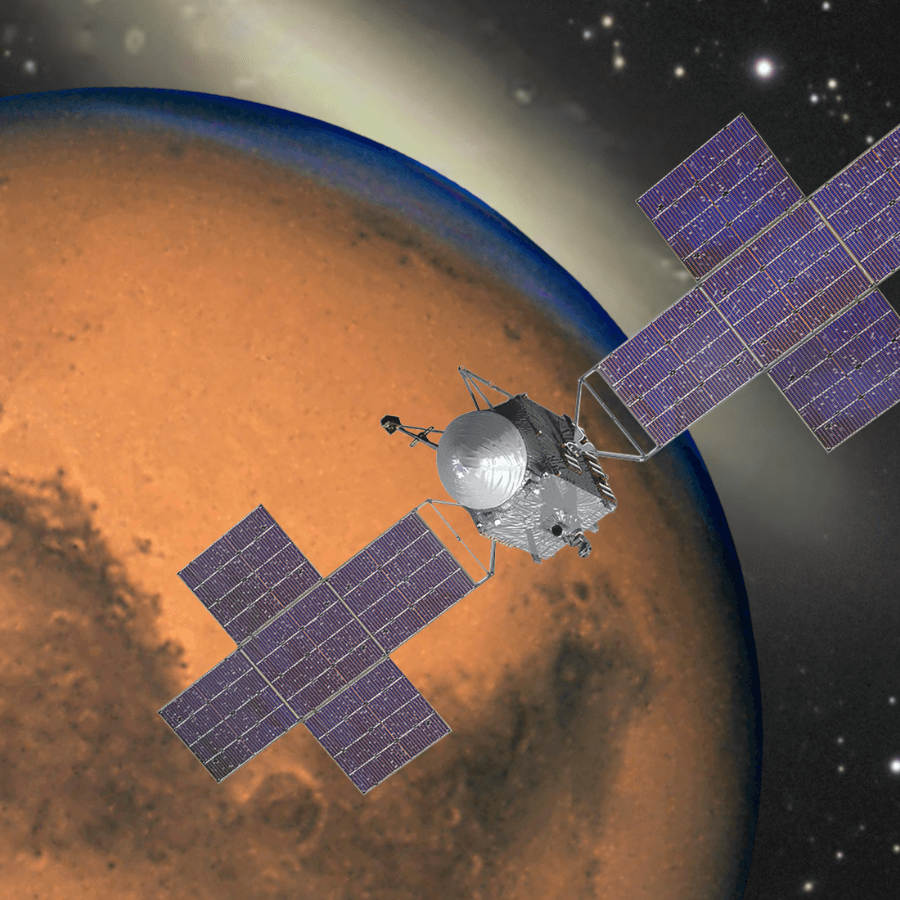
- NASA's Psyche spacecraft is executing a gravity assist flyby of Mars on May 15, 2026, passing within approximately 2,800 miles (4,500 kilometers) of the planet's surface.
- This maneuver is designed to provide a speed boost and adjust the spacecraft's trajectory, setting it on course for its ultimate destination, the metal-rich asteroid 16 Psyche.
- The spacecraft, launched in October 2023, is midway through its six-year journey and is expected to arrive at the asteroid in August 2029 for two years of detailed study.
- During the Mars flyby, all of Psyche's science instruments are active, capturing thousands of images and observations of Mars, which will also serve as a practice run for future operations.
Why it matters
Competing interpretations
Some sources emphasize the mission's purely scientific pursuit of understanding planetary origins, while others subtly highlight the asteroid's immense potential economic value, framing the same facts through different lenses of significance. The operational details of the Mars flyby are consistently reported as a technical necessity and a calibration opportunity, but the broader implications for scientific understanding versus resource potential receive varied emphasis.
Where disagreement lives
The primary fault-line of disagreement lives in the fundamental scientific hypothesis about the true nature and composition of asteroid Psyche itself—whether it is indeed the exposed metallic core of a protoplanet or a less dense 'rubble pile' as an alternative study suggests.
What's still uncertain
The precise composition and internal structure of asteroid Psyche remain unknown, with competing hypotheses suggesting it could be an intact metallic core or a less dense rubble pile. The mission's ultimate success in fully characterizing the asteroid's nature and its implications for planetary science is still years away.
Who Is Affected
NASA and JPL
Successful flyby and mission progress strengthen institutional reputation and validate long-term strategic planning for complex space missions.
Planetary Scientists
The mission provides unprecedented data to test hypotheses about planetary cores and solar system origins, directly impacting their research and understanding.
Taxpayers
Continued investment in scientific discovery and technological advancement, with potential long-term benefits in knowledge and innovation.
Aerospace Industry
Ongoing contracts for spacecraft development, launch services, and operational support, contributing to technological expertise and employment.
Human stakes
The Psyche mission, while seemingly distant, resonates with a deeply human desire to understand our origins and place in the cosmos. It represents a collective investment of taxpayer resources into a long-term quest for knowledge, promising insights into how planets, including our own life-sustaining Earth, came to be. For ordinary people, it's a testament to human ingenuity and perseverance, offering a glimpse into the vast unknowns beyond our planet and inspiring future generations to pursue scientific and engineering careers. The potential for groundbreaking discoveries, even if years away, fuels a sense of shared human endeavor and the expansion of our…
Source spectrum
Issue intelligence
Judgments for navigating this story—not scores. Expand tooltips on each chip for rationale.
Note. Evidence confidence is about factual solidity; uncertainty is about how open-ended outcomes still are. Both can be high at once.
Decision matrix
Compares major options at a glance. Cells are summaries, not forecasts; tradeoffs are simplified for clarity.
| Option | Upside | Risk | Who benefits | Who bears cost |
|---|---|---|---|---|
| Continue funding and executing long-duration, high-cost deep space missions like Psyche. | Potential for groundbreaking scientific discoveries about planetary formation and the early solar system, advancing human knowledge and inspiring future generations. | Significant financial investment with no guarantee of specific scientific outcomes; potential for technical failures or unexpected challenges. | Scientific community, aerospace industry, humanity (through knowledge expansion). | Taxpayers. |
| Prioritize shorter-term, lower-cost missions or terrestrial scientific research. | Potentially quicker returns on investment, addressing more immediate societal needs or scientific questions with less risk. | Foregoing unique opportunities for fundamental discoveries about the cosmos; limiting the scope of human exploration and technological advancement. | Specific scientific fields, potentially sectors with immediate practical applications. | Long-term scientific understanding, future generations (missing out on unique discoveries). |
Plausible paths forward
Our assessment
Structural read
The Psyche mission's Mars flyby is a textbook example of a learning system in action, where a complex, long-duration endeavor integrates operational necessities like gravity assists with critical instrument calibration. This approach prioritizes iterative refinement and data-driven understanding over rigid adherence to initial assumptions, embodying a preference for systems that can self-correct. The mission explicitly names the scientific tradeoffs between competing hypotheses about Psyche's composition, demonstrating transparency in the face of uncertainty and a commitment to long-term resilience in scientific inquiry.
Source reliability
Source reliability (6)
- AP Newswire · international · primary reporting
AP News is a major international wire service known for its objective and factual reporting. It primarily reports on events and official statements, often serving as a foundational source for other news outlets. Readers should calibrate that its reporting typically presents information directly from official sources or eyewitness accounts, focusing on verifiable facts rather than in-depth analysis or investigative critiques of underlying policies or broader implications.
- NASA Scienceofficial · on the ground · primary reporting
This article is direct reporting from NASA, the agency managing the Psyche mission. It provides first-hand information, technical details, and quotes from mission personnel. Readers should calibrate for the inherent focus on mission progress and technical aspects.
- Spaceexpert · international · primary reporting
Space.com reports on space exploration and science, often synthesizing information from official agencies and mission personnel. Readers should calibrate for the article's focus on technical details and mission progress, as it serves to inform about the Psyche mission's operational aspects rather than broader societal impacts or critical analysis.
- EarthSkyexpert · international · aggregation
EarthSky reports on scientific developments and space missions, synthesizing information from scientific bodies and studies. Readers should understand that while it aims for accuracy in explaining complex topics, it often simplifies details and relies on external scientific research and official mission updates.
- Scientific Americanunknown · international · primary reporting
Scientific American is a reputable science publication known for reporting on scientific research and discoveries. It typically relies on direct interviews with scientists and researchers, and official statements from scientific institutions like NASA. Readers should expect a focus on scientific accuracy and expert perspectives, with a clear distinction between established facts, hypotheses, and future projections.
- Universe Todayexpert · international · primary reporting
Universe Today reports on space and astronomy news, often featuring direct quotes from scientists and mission personnel. Readers should note its focus on scientific advancements and exploration, with a high degree of transparency in sourcing official statements and data.
Incentives
Stated goals vs plausible private incentives—evidence strength is an analytic judgment, not proof of bad faith.
| Actor | Stated goal | Likely private incentive | Evidence |
|---|---|---|---|
| NASA/JPL | Advance scientific understanding of planetary formation and the early solar system through direct exploration of a unique metallic asteroid. | Maintain institutional leadership in space exploration, secure future funding, foster technological innovation, and attract top scientific talent. | strong |
| Scientists (e.g., Jim Bell, Sarah Bairstow, Lindy Elkins-Tanton) | Gather and analyze data from the Psyche mission to test hypotheses about asteroid composition and planetary origins. | Achieve groundbreaking discoveries, publish research, advance their careers, and contribute to fundamental human knowledge. | strong |
| Public/Taxpayers | Support scientific exploration and technological advancement for the benefit of humanity. | Sense of national pride, inspiration, potential long-term benefits from technological spin-offs, and satisfaction from expanding human knowledge. | moderate |
Second-order effects
Increased public interest and funding for deep space exploration, particularly missions targeting unique celestial bodies.
Probability: medium · Horizon: medium · Affected: NASA, scientific community, aerospace industry, taxpayers
Shift in scientific understanding of planetary formation, potentially leading to new theoretical models and research priorities.
Probability: high · Horizon: long · Affected: planetary scientists, astrophysicists, academic institutions
Temporal signal
How the signal travels in time: noise versus structure, and how long institutions may remember it.
- Significance
- structural shift
- Durability
- years
- Institutional memory
- high
The mission represents a multi-year endeavor with long-term scientific goals, contributing to a structural shift in our understanding of planetary formation rather than being a fleeting event. Its success will be remembered for decades.
Civilizational memory
Echoes and precedents across time—interpretive, not a factual source for this event.
Historical rhymes
- Age of Exploration
- Apollo program's scientific dividends
Institutional precedents
- Grand Tour missions (Voyager)
- Mars Exploration Rovers
The Psyche mission taps into humanity's enduring drive for exploration and understanding our cosmic origins, echoing ancient quests to map the unknown. It represents a collective investment in knowledge that transcends immediate utility, contributing to our shared narrative of scientific progress and our place in the universe.
Counterfactual intelligence
If the Mars gravity assist flyby had failed or been significantly off-target, the Psyche mission would have required substantial additional propellant to correct its trajectory, potentially delaying its arrival at the asteroid or even compromising the mission's ability to achieve its full scientific objectives due to fuel constraints. This would have increased costs and reduced the overall efficiency of the mission.
Policy levers
- International collaboration in deep space missions
- Long-term funding commitments for fundamental science
- Public-private partnerships in space technology
Fragile assumptions
- The asteroid Psyche is indeed metal-rich as hypothesized.
- The spacecraft's systems will remain operational for the entire six-year journey.
- Public and political will to fund such long-duration missions will persist.
Epistemic governance
Institutional trust, coordination, values in tension, and testable forecasts—models for reasoning, not verdicts of fact.
Institutional integrity
Epistemic diversity
- planetary science
- astrophysics
- space engineering
The reporting explicitly preserves the scientific disagreement regarding Psyche's composition (metallic core vs. rubble pile), highlighting that the mission's purpose is to resolve this uncertainty through empirical data.
Reality contact
The costs are borne by taxpayers through government funding, representing a collective investment in long-term scientific knowledge rather than immediate material returns. The benefits are primarily intellectual and inspirational.
The mission's operational control from NASA's Jet Propulsion Laboratory in Southern California and the involvement of Arizona State University for imaging leadership ground the abstract scientific endeavor in specific institutional and geographic locations.
Risk signals (relative)
- Prestige biaslow
- Elite consensus lock-inlow
- Engagement optimizationlow
- Narrative comfortlow
- Institutional avoidancelow
Coherence
The mission embodies a coherent philosophical commitment to the patient, methodical pursuit of fundamental knowledge, accepting the inherent uncertainties of exploration and valuing the process of scientific inquiry itself.
Civilizational meaning
This mission contributes to a civilizational meaning centered on humanity's drive to explore, understand, and expand its knowledge of the universe, fostering a sense of shared purpose and intellectual legacy.
Institutional legitimacy
- NASA
The successful execution of complex maneuvers like the Mars gravity assist and the transparent communication of mission progress reinforce public trust in NASA's technical competence and its mandate for scientific exploration.
- Scientific Community
The mission's design to test competing scientific hypotheses and its commitment to data-driven discovery demonstrate the scientific method in action, bolstering the credibility of planetary science as a field.
Coordination
The Psyche mission demonstrates high cross-institutional feasibility, with strong coordination evident between NASA, its Jet Propulsion Laboratory, and academic institutions like Arizona State University. The clear division of labor and shared scientific objectives facilitate effective collaboration, indicating a well-oiled system for large-scale scientific endeavors.
Cross-institutional feasibility: high
Moral tradeoff surface
- Scientific Discovery ↔ Immediate Societal NeedsTension strength: 30%
Funding for deep space missions represents a long-term investment in knowledge, potentially diverting resources from more immediate social or economic challenges, though the tension is often implicit rather than explicitly debated.
Forecasts and calibration
Resolvable claims recorded at publish time for later outcome tracking.
- By the end of 2029, initial data from the Psyche spacecraft will provide strong evidence supporting either the 'metallic core' or 'rubble pile' hypothesis for asteroid 16 Psyche's composition.Domain: planetary scienceKind: institutional changeTier: highResolve by: 2029-12-31
- Within the next 12 months, NASA will release a detailed time-lapse video of the Psyche spacecraft's Mars flyby, showcasing the planet's changing appearance from crescent to full sphere.Domain: public engagementKind: otherTier: highResolve by: 2027-05-15
Related News



Comments
Revisions(1)
NASA spacecraft to fly past Mars this week, on voyage to rare metal asteroid
CurrentCognition tier backfill (compression + gated deep/civilizational fields)