


Snapshot
What happened
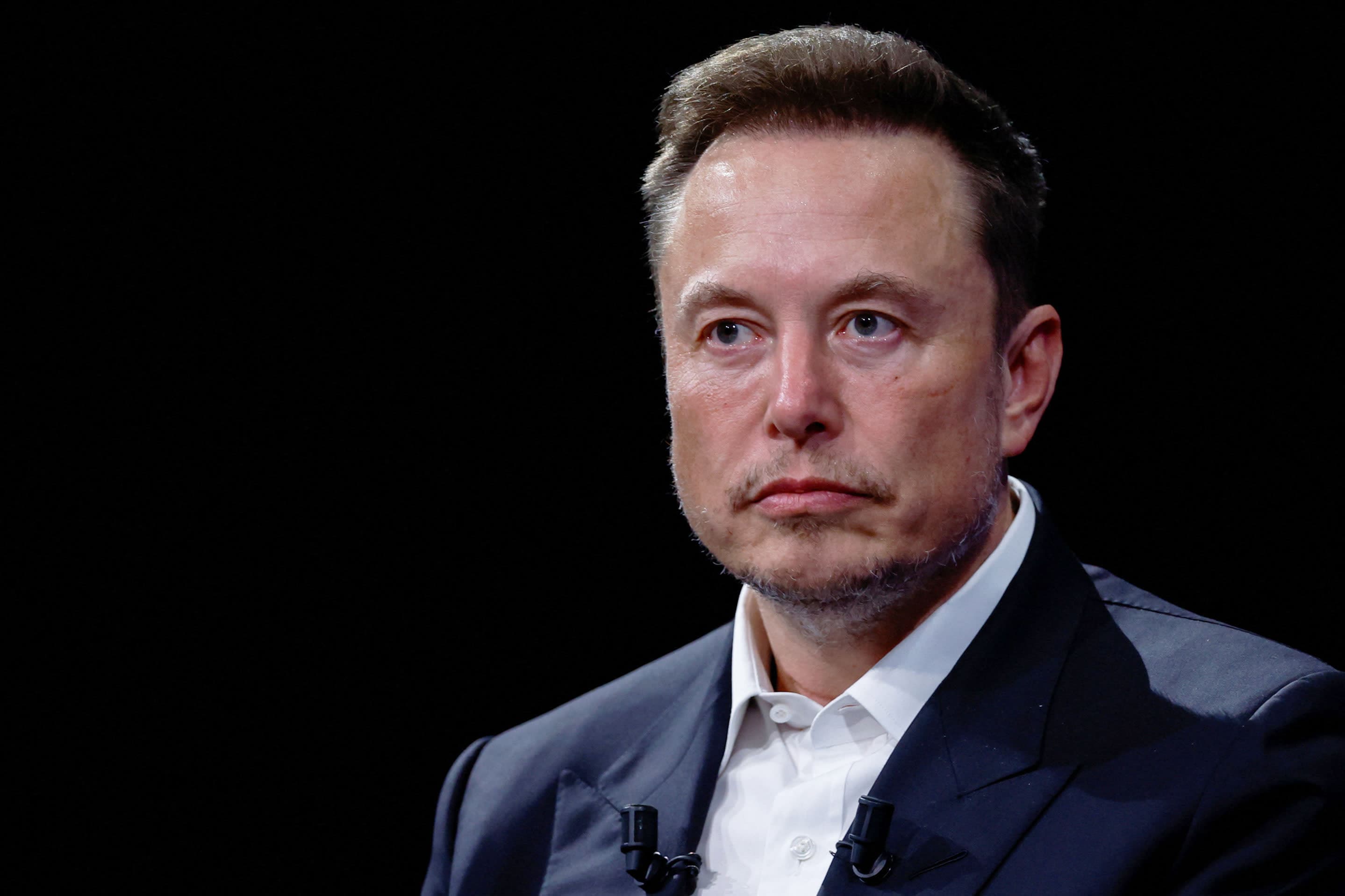
- Elon Musk's company, SpaceX, is planning its Initial Public Offering (IPO) on the Nasdaq stock exchange, scheduled for June 12.
- SpaceX intends to offer shares at a fixed price of $135 each, which would value the company at approximately $1.75 trillion.
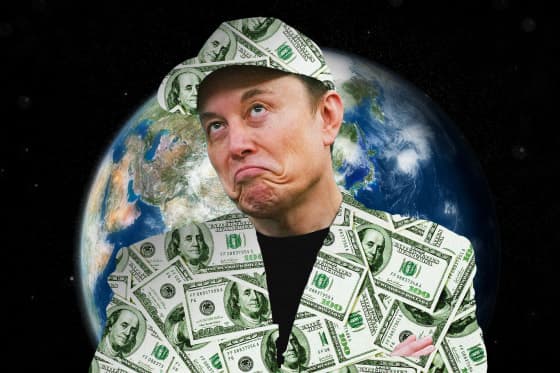
- The prospect of Musk potentially becoming the world's first trillionaire has intensified criticism from progressive politicians regarding wealth inequality and calls for higher taxes on the rich.
- Critics highlight Musk's reliance on billions in government contracts and subsidies for his success, while Musk states his wealth is for establishing a human settlement on Mars.
Why it matters
Competing interpretations
The same facts—SpaceX's IPO and Musk's wealth—are interpreted differently: as a triumph of innovation and entrepreneurial vision by some, justifying significant private reward for grand societal goals (e.g., Mars colonization). Others view it as an exacerbation of systemic wealth inequality, a failure of tax policy, and an example of private entities unduly profiting from public investment without sufficient accountability or redistribution.
Where disagreement lives
Disagreement primarily lives in the moral and strategic domains: whether extreme wealth is a societal good or ill, how wealth should be taxed, and the appropriate balance between private innovation and public benefit, particularly when public funds are involved. There's also a factual disagreement on Musk's exact post-IPO net worth.
What's still uncertain
It is not definitively known if Elon Musk will achieve trillionaire status immediately post-IPO, as forecasts differ. The precise long-term market performance of SpaceX shares and the extent to which its high valuation will be sustained or challenged by public investors remain uncertain. The full scope of future government contracts and their impact on SpaceX's profitability is also not entirely clear.
Who Is Affected
Progressive Politicians/Voters
Strengthened resolve to push for wealth redistribution and tax reforms, using Musk's wealth as a potent symbol.
Individual Investors
Opportunity for high-risk, high-reward investment, but also potential for significant losses due to high valuation and market volatility.
Tax Authorities/Government
Increased pressure to review and potentially revise tax laws concerning wealth accumulation and corporate subsidies.
Human stakes
For ordinary people, this story crystallizes anxieties about economic fairness and opportunity. The vast sums of wealth discussed feel abstract, yet they directly relate to debates over public services, infrastructure, and the cost of living. It raises questions about whether the economic system is rigged, if public funds are being used to enrich a few, and what kind of future is being built—one where a few individuals control immense resources, or one where prosperity is more broadly shared and accountable.
Source spectrum
Issue intelligence
Judgments for navigating this story—not scores. Expand tooltips on each chip for rationale.
Note. Evidence confidence is about factual solidity; uncertainty is about how open-ended outcomes still are. Both can be high at once.
Plausible paths forward
Our assessment
Structural read
The SpaceX IPO and the discussion around Elon Musk's potential trillionaire status illuminate a structural tension in complex societies: the balance between incentivizing innovation and addressing wealth concentration. While market mechanisms reward entrepreneurial success, the significant role of government contracts and the perceived inadequacy of existing tax frameworks raise questions about the legitimacy and sustainability of such extreme wealth. The debate is less about Musk personally and more about the systems that enable and shape these outcomes, challenging the implicit social contract around wealth creation and distribution.
Source reliability
Source reliability (9)
- nbcnewswire · international · primary reporting
NBC News is a national news organization reporting on political and economic issues. It relies on direct quotes from politicians, experts, and social media reactions. Readers should calibrate that the article focuses on the political and social implications of wealth accumulation, presenting a specific narrative of outrage and agency assigned to political actors, while omitting deeper economic arguments for wealth and innovation incentives.
- CNBCwire · international · primary reporting
CNBC is a prominent business news outlet known for its financial reporting. This article relies on an unnamed source for sensitive IPO details, which is a common practice in financial journalism, but readers should note the information is not officially confirmed by the company.
- Bloombergwire · international · primary reporting
Bloomberg is a global financial news and data service known for its extensive market coverage and proprietary data indexes. Readers should note its focus on economic and financial implications, often relying on reported figures and internal calculations like the Bloomberg Billionaires Index.
- Yahoo Financeofficial · international · primary reporting
This is an official communication from Yahoo Finance detailing its privacy practices and cookie usage. It outlines the types of data collected, the purposes for which it is used, and the options available to users for managing their consent and privacy settings. Readers should note this is a direct statement of policy from the platform itself.
- Bloombergexpert · commentary · commentary
Bloomberg is a financial news and data provider. This article is an opinion piece, offering analysis and commentary on financial markets and company valuations. Readers should consider this as expert analysis rather than primary factual reporting, and evaluate the arguments presented.
- Twelfth Magpieexpert · commentary · commentary
This source provides investment analysis and recommendations, clearly stating that its content represents opinions that may differ from its premium services. The author discloses personal stock holdings, offering transparency on potential conflicts of interest. Readers should calibrate this as financial advice rather than objective news reporting.
- MarketWatchunknown · commentary · commentary
MarketWatch is a financial news publication known for market analysis and commentary. This specific article is an opinion piece, meaning it presents an individual's perspective and analysis rather than objective reporting. Readers should calibrate for subjective interpretation and arguments.
- xsocial media · commentary · primary reporting
x is a social media platform. This specific content is a direct system message from the platform itself, communicating technical requirements for its use. Readers should understand this as an operational directive rather than a news report or external commentary.
- xsocial media · international · primary reporting
This is a direct system message from the social media platform x.com regarding its technical requirements. Readers should calibrate that this information is authoritative for the platform's own functionality and user access conditions.
Incentives
Stated goals vs plausible private incentives—evidence strength is an analytic judgment, not proof of bad faith.
| Actor | Stated goal | Likely private incentive | Evidence |
|---|---|---|---|
| Elon Musk | Fund Mars colonization and multi-planetary life. | Maximize personal wealth and control over ventures, solidify legacy as a visionary entrepreneur. | moderate |
| Progressive Politicians | Address wealth inequality and ensure a fairer economic system. | Mobilize voter base, gain political capital by championing popular causes, and differentiate from opponents. | strong |
| SpaceX Investors | Achieve high financial returns from a high-growth, innovative company. | Capitalize on market excitement and potential for exponential growth in the space sector. | strong |
Institutional stress
Second-order effects
Increased public distrust in the fairness of economic systems, particularly among younger generations, if wealth inequality continues to grow unchecked.
Probability: medium · Horizon: medium · Affected: General public, Progressive political movements, Economic policymakers
Temporal signal
How the signal travels in time: noise versus structure, and how long institutions may remember it.
- Significance
- structural shift
- Durability
- years
- Institutional memory
- high
The event highlights ongoing structural debates about wealth concentration, market power, and the social contract, which have long-term implications for economic policy and public trust.
Civilizational memory
Echoes and precedents across time—interpretive, not a factual source for this event.
Historical rhymes
- Gilded Age wealth disparities
- early 20th-century trust-busting movements
Institutional precedents
- debates over corporate personhood and influence
- historical shifts in tax policy to address economic inequality
The story touches upon fundamental questions about the kind of society we are building: one where technological progress is pursued at all costs, or one that balances innovation with equity, trust, and democratic accountability. It tests the capacity of institutions to adapt to rapid wealth concentration and technological change without eroding social cohesion.
Counterfactual intelligence
If SpaceX's IPO had not occurred, or if Musk's wealth had not approached trillionaire status, the intensity of political attacks on wealth inequality might have been less pronounced, and the immediate urgency for tax reform debates might have been lower, though the underlying issues would persist.
Policy levers
- Progressive wealth taxation
- Increased transparency in government contracts
- Reforms to capital gains tax
Fragile assumptions
- That extreme wealth is inherently beneficial for society due to trickle-down effects.
- That current tax structures are optimal for both innovation and equity.
Epistemic governance
Institutional trust, coordination, values in tension, and testable forecasts—models for reasoning, not verdicts of fact.
Institutional integrity
Epistemic diversity
- Neoclassical economics (market efficiency)
- Progressive economics (wealth redistribution)
- Political economy (power dynamics)
The reporting clearly highlights the contrasting views of political critics and market analysts, preserving the dissent around the societal implications of the IPO.
Reality contact
The debate over wealth inequality directly impacts public sentiment regarding the fairness of the economic system, potentially influencing policy decisions that affect taxation, public services, and economic opportunity for ordinary citizens.
The Michigan lawmaker's example of one trillion dollars funding the state's budget for 12 years provides a concrete, relatable scale for the abstract concept of extreme wealth.
Risk signals (relative)
- Prestige biasmedium
- Elite consensus lock-inmedium
- Engagement optimizationhigh
- Narrative comfortlow
- Institutional avoidancelow
Coherence
The coverage implicitly grapples with the tension between individual liberty to accumulate wealth and collective responsibility for societal well-being, reflecting a core philosophical challenge in modern governance.
Civilizational meaning
This story contributes to the ongoing narrative about humanity's aspirations for space exploration and technological advancement, while simultaneously questioning the ethical and equitable distribution of the benefits and burdens of such grand endeavors within a globalized society.
Institutional legitimacy
- Market Economy
The scale of wealth concentration and the role of government subsidies challenge the perception of a fair and meritocratic market, leading to calls for systemic reform.
- Taxation System
Reports of minimal tax payments by the ultra-wealthy, juxtaposed with calls for taxing the rich, undermine public trust in the fairness and effectiveness of current tax laws.
Coordination
Significant ideological and political barriers hinder coordinated action on wealth taxation and market regulation. The divergent incentives of key actors, coupled with the complexity of the issues, create deadlocks that prevent comprehensive solutions and erode public trust in institutional effectiveness.
Cross-institutional feasibility: low
Barriers
- Ideological polarization on economic policy
- Lobbying power of wealthy individuals and corporations
- Complexity of international tax laws
Collective action traps
- Political gridlock preventing tax reform
- Race to the bottom in corporate tax rates among nations
Incentive deadlocks
- Politicians incentivized to appeal to specific donor bases vs. broad public sentiment
- Companies incentivized to minimize tax burden within legal frameworks
Moral tradeoff surface
- Innovation & Entrepreneurial Reward ↔ Wealth Equity & Social CohesionTension strength: 80%
The pursuit of groundbreaking innovation often concentrates wealth, creating tension with societal goals of equitable distribution and preventing extreme disparities that can undermine social cohesion.
- Economic Efficiency ↔ Democratic AccountabilityTension strength: 70%
Highly efficient market mechanisms can lead to outcomes that are perceived as undemocratic or unaccountable, especially when private entities benefit from public resources without commensurate public control or benefit.
Forecasts and calibration
Resolvable claims recorded at publish time for later outcome tracking.
- Within the next 12 months, at least one major legislative proposal for a wealth tax or significant increase in capital gains tax will be formally introduced in the U.S. Congress, citing extreme wealth concentration as a primary justification.Domain: electionsKind: institutional changeTier: highResolve by: 2025-06-12
Related News



Comments
Revisions(2)
Opinion: SpaceX, Anthropic and other mega-IPOs could leave your index fund completely out of luck
CurrentArticle content was refined based on new information or analysis.
Opinion: SpaceX, Anthropic and other mega-IPOs could leave your index fund completely out of luck
Article content was refined based on new information or analysis.