
Snapshot
What happened
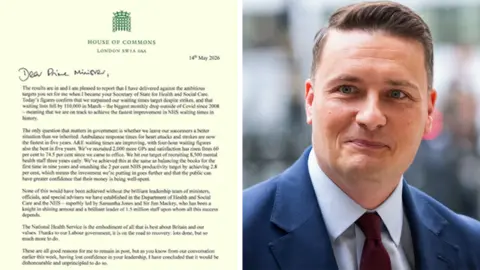
- Wes Streeting, the British Health Secretary, resigned on Thursday, stating he had lost confidence in Prime Minister Keir Starmer's leadership, which he characterized as lacking vision and direction. Streeting called for a broad Labour Party leadership contest to replace Starmer.
- Prime Minister Keir Starmer is under increasing pressure and facing open rebellion within his Labour Party, largely due to poor results in recent local and regional elections, which have raised doubts about his judgment and leadership ability.
- The British economy experienced a 0.6% growth in the first quarter, surpassing expectations, despite the ongoing impact of the Iran war and a series of prior national crises including Brexit and the Covid pandemic.
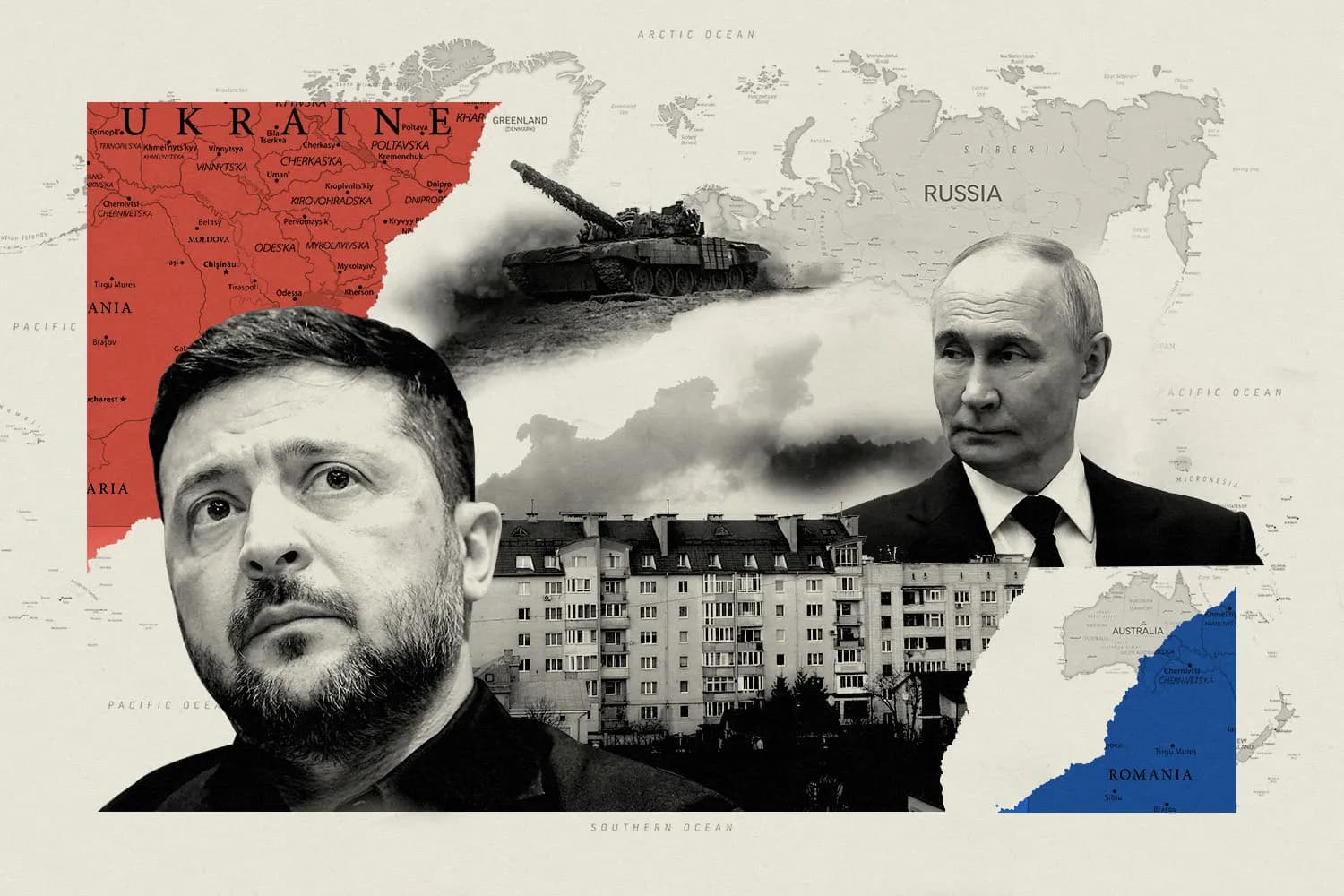
- Globally, ongoing conflicts in Europe and the Middle East are intensifying challenges, with the World Food Program reporting a reduction in aid to 1.5 million fewer people since the war with Iran began.
Why it matters
Competing interpretations
Starmer's supporters might interpret the challenge as an opportunistic move that undermines party unity at a critical juncture, potentially destabilizing a government facing immense external pressures. Challengers, however, frame it as a necessary intervention to prevent further 'drift' and to re-energize the party with a clearer vision, arguing that inaction would be more detrimental to long-term legitimacy. The same facts of recent electoral performance are interpreted either as a temporary setback or as definitive proof of leadership failure.
Where disagreement lives
The core disagreement lives at the strategic and institutional level regarding the Labour Party's future direction and leadership effectiveness. It's not merely about personalities but about whether the current leadership offers a sufficiently 'bold vision and bigger solutions' to address complex national and global challenges, and whether the party's internal processes can facilitate a legitimate debate on this without eroding trust.
What's still uncertain
The precise number of Labour lawmakers currently prepared to support a leadership challenge remains unclear, impacting the immediate viability of a formal contest. The specific policy alternatives or ideological differences that challengers would propose, beyond general calls for 'vision,' are not yet fully articulated. The extent of public opinion shift regarding Starmer's leadership, beyond recent election results, is not detailed across sources.
Who Is Affected
Labour Party members
Increased internal debate and potential factionalism, but also an opportunity for renewed engagement in shaping party direction.
UK electorate
Uncertainty regarding future government stability and policy direction, potentially leading to voter fatigue or disengagement.
International allies and adversaries
Perception of UK political instability, potentially impacting diplomatic relations or strategic alliances.
Public services (e.g., NHS)
Potential for disruption or delayed policy implementation if ministerial focus shifts to leadership battles.
Human stakes
This political upheaval, while seemingly distant, directly impacts the daily lives of ordinary people. Uncertainty at the top of government can delay crucial policy decisions affecting public services like healthcare, which Wes Streeting oversaw. Economic stability, already fragile due to global conflicts and past crises, could be further jeopardized by political instability, potentially affecting jobs, prices, and household incomes. The perception of political leaders lacking 'vision' or 'direction' can erode public trust in the ability of politics to solve problems, fostering cynicism and disengagement from democratic processes, which are essential for collective well-being.
Source spectrum
Issue intelligence
Judgments for navigating this story—not scores. Expand tooltips on each chip for rationale.
Note. Evidence confidence is about factual solidity; uncertainty is about how open-ended outcomes still are. Both can be high at once.
Decision matrix
Compares major options at a glance. Cells are summaries, not forecasts; tradeoffs are simplified for clarity.
| Option | Upside | Risk | Who benefits | Who bears cost |
|---|---|---|---|---|
| Starmer maintains leadership, makes minor concessions | Short-term stability, avoids divisive contest. | Perceived as weak, fails to address core criticisms, continued 'drift'. | Starmer's loyalists, those preferring stability. | Challengers, those seeking bold change, potentially the wider electorate if problems persist. |
| Leadership contest proceeds, new leader emerges | Potential for renewed vision, party re-energization, addressing internal discontent. | Divisive internal battle, political instability, potential for electoral backlash. | Challengers, those seeking a new direction, potentially the electorate if a strong leader emerges. | Starmer's loyalists, those preferring stability, potentially the party if it fractures. |
| Starmer voluntarily steps aside, managed transition | Orderly transition, potential for broader consensus on new leadership, avoids acrimony. | Still creates political uncertainty, perception of weakness. | The Labour Party (potentially), those seeking a fresh start. | Starmer, those who value his leadership. |
Plausible paths forward
Our assessment
Structural read
This event is less about a single policy failure and more about a perceived institutional failure of leadership to articulate a coherent vision in a complex, crisis-ridden era. The call for a 'battle of ideas' rather than 'personalities' suggests a deeper yearning within the party for a learning system that can self-correct and adapt, rather than clinging to rigid frameworks or short-term optimization. The challenge highlights the tension between the need for stable governance and the demand for dynamic, legitimate reform that builds on existing capacity while addressing root causes of public discontent.
Source reliability
Source reliability (4)
- BBC Newswire · international · primary reporting
BBC News is a major international news organization. This article provides the full text of official letters, acting as a direct conduit for primary source material. Readers should understand that the content reflects the views and statements of the letter writers, not BBC's editorial stance, though BBC provides the platform.
- CNNwire · international · commentary
CNN is a major international news organization. This article presents a collection of segments, primarily featuring expert commentary and analysis from various individuals on diverse global topics, rather than CNN's direct primary reporting on a single event. Readers should calibrate that these are expert opinions and reported statements.
- AP Newswire · international · primary reporting
AP News provides primary reporting from its international correspondents, offering a factual account of events. It maintains high transparency in its sourcing, typically attributing information clearly. Readers should note that while AP aims for objectivity, its focus is on verifiable facts and direct statements, rather than in-depth analysis of underlying political motivations or long-term implications.
- The New York Timesinternational · international · primary reporting
The New York Times is a major international news organization known for extensive primary reporting. Its global perspective on events and practice of attributing information to named sources or official documents contribute to high transparency. Readers should calibrate its focus on significant political developments and their broader implications.
Incentives
Stated goals vs plausible private incentives—evidence strength is an analytic judgment, not proof of bad faith.
| Actor | Stated goal | Likely private incentive | Evidence |
|---|---|---|---|
| Wes Streeting | To initiate a broad Labour Party leadership contest to replace Starmer, citing a lack of vision and direction. | To position himself as a viable future leader, to genuinely push for a different strategic direction for the party, or to capitalize on Starmer's perceived weakness. | strong |
| Keir Starmer | To continue leading the government, address national problems, and unite the party. | To maintain power and implement his agenda, to avoid a divisive leadership battle, and to demonstrate resilience. | strong |
| Angela Rayner & Andy Burnham | To play a part in any leadership election, with Burnham seeking eligibility. | To position themselves as future leaders, to influence the party's direction, and to capitalize on the current instability. | moderate |
Institutional stress
Second-order effects
Increased political instability in the UK, potentially impacting investor confidence and international relations.
Probability: medium · Horizon: short · Affected: financial markets, international allies, UK citizens
Diversion of governmental focus from critical policy issues (e.g., healthcare, economy, international conflicts) to internal party politics.
Probability: high · Horizon: short · Affected: UK citizens (recipients of public services), government departments
Temporal signal
How the signal travels in time: noise versus structure, and how long institutions may remember it.
- Significance
- structural shift
- Durability
- months
- Institutional memory
- high
This event signals a potential shift in the Labour Party's leadership and strategic direction, with implications for its long-term electoral viability and governance approach. It's not mere noise but a challenge to the party's foundational structure.
Civilizational memory
Echoes and precedents across time—interpretive, not a factual source for this event.
Historical rhymes
- Internal party challenges to sitting leaders are a recurring feature of parliamentary democracies, often triggered by electoral setbacks or perceived leadership weakness.
- The tension between party unity and the need for renewal echoes historical struggles within major political parties.
Institutional precedents
- The procedural rules for triggering a leadership contest are a formal institutional mechanism for internal accountability and change.
- The historical reluctance of the Labour Party to oust a sitting prime minister mid-term sets a high bar for such challenges.
The ability of a major political party to navigate internal dissent constructively, articulate a compelling vision for the future, and maintain public trust in democratic processes is crucial for the long-term health and legitimacy of the political system, especially in an era marked by global instability and profound societal challenges.
Counterfactual intelligence
If Labour had performed strongly in recent local and regional elections, the pressure on Starmer would likely be significantly lower, and Streeting's resignation might not have occurred, or would have been framed differently. This suggests that electoral performance is a critical trigger for internal party challenges, validating the causal link identified in the Claim Ledger.
Policy levers
- Internal party rule changes for leadership contests
- Strategic communication of a renewed policy agenda
- Cabinet reshuffles to demonstrate responsiveness
Fragile assumptions
- That a new leader would necessarily unite the party or perform better electorally.
- That the public is primarily concerned with leadership 'vision' over immediate material improvements.
Epistemic governance
Institutional trust, coordination, values in tension, and testable forecasts—models for reasoning, not verdicts of fact.
Institutional integrity
Epistemic diversity
- Political science (leadership studies, party dynamics)
- Economics (macroeconomic indicators, impact of conflict)
- Geopolitics (international conflict analysis)
The reporting directly presents the dissenting views of Wes Streeting and other challengers alongside Starmer's response, ensuring diverse perspectives are visible.
Reality contact
The potential for delayed policy on healthcare and economic stability directly impacts citizens' access to services and financial well-being.
The context of 'disastrous results for his Labour Party last week in local and regional elections' provides a grounded, recent electoral reality informing the political pressure.
Risk signals (relative)
- Prestige biaslow
- Elite consensus lock-inlow
- Engagement optimizationmedium
- Narrative comfortlow
- Institutional avoidancelow
Coherence
The analysis aligns with OAP's commitment to understanding complex systems and naming tradeoffs, focusing on institutional dynamics and the search for durable solutions over ideological purity.
Civilizational meaning
The struggle for coherent leadership in a time of profound global challenges touches upon the fundamental need for societies to adapt and maintain a sense of shared purpose and direction for future generations.
Institutional legitimacy
- Labour Party leadership
The public resignation of a senior minister and calls for a leadership contest directly challenge the legitimacy and authority of the current party leader, particularly following poor electoral results.
- UK Executive (Prime Minister's Office)
While the Prime Minister remains in office, the open rebellion and questioning of his vision by a former cabinet member contest the perceived strength and mandate of the executive, potentially weakening its ability to govern effectively.
Coordination
The internal Labour Party conflict is characterized by significant coordination barriers stemming from divergent strategic visions and individual political ambitions. This creates collective action traps where actors may hesitate or act in ways that undermine overall party coherence, leading to an incentive deadlock between the incumbent and challengers, making a unified, constructive path difficult.
Cross-institutional feasibility: low
Barriers
- Divergent strategic visions within the Labour Party leadership.
- Lack of a clear, unifying narrative post-election setbacks.
- Procedural hurdles for triggering a leadership contest, which can create uncertainty and delay.
Collective action traps
- The 'free rider' problem where potential challengers wait for others to make the first move, leading to delayed or uncoordinated action.
- The risk of a 'prisoner's dilemma' where individual actors prioritize their own advancement over party unity, leading to a suboptimal outcome for the party as a whole.
Incentive deadlocks
- Starmer's incentive to maintain power conflicts with challengers' incentives to seize it, creating a zero-sum dynamic.
- The incentive to appear decisive and visionary conflicts with the need for broad internal consensus and compromise.
Moral tradeoff surface
- Party Unity/Stability ↔ Accountability/RenewalTension strength: 80%
Maintaining party unity under Starmer offers stability but risks stifling dissent and avoiding accountability for perceived failures. Pursuing a leadership contest offers renewal and accountability but risks fracturing the party and creating instability.
- Short-term Political Expediency ↔ Long-term Vision/ResilienceTension strength: 70%
Prioritizing short-term political survival might lead to incremental adjustments, while the demand for a 'bold vision' implies a willingness to undertake more significant, potentially disruptive, long-term strategic shifts.
Forecasts and calibration
Resolvable claims recorded at publish time for later outcome tracking.
- A formal Labour Party leadership contest will be triggered by the end of Q3 2026, requiring 81 Labour lawmakers to publicly support the challenge.Domain: electionsKind: institutional changeTier: mediumResolve by: 2026-09-30
- Keir Starmer will announce a significant cabinet reshuffle and a clearer articulation of his policy agenda within the next two months in an attempt to consolidate his position and address criticisms of 'drift'.Domain: politicsKind: institutional changeTier: highResolve by: 2026-07-14
Related News



Comments
Revisions(1)
UK health secretary resigns, setting up a potential Labour leadership challenge to Keir Starmer
CurrentCognition tier backfill (compression + gated deep/civilizational fields)