
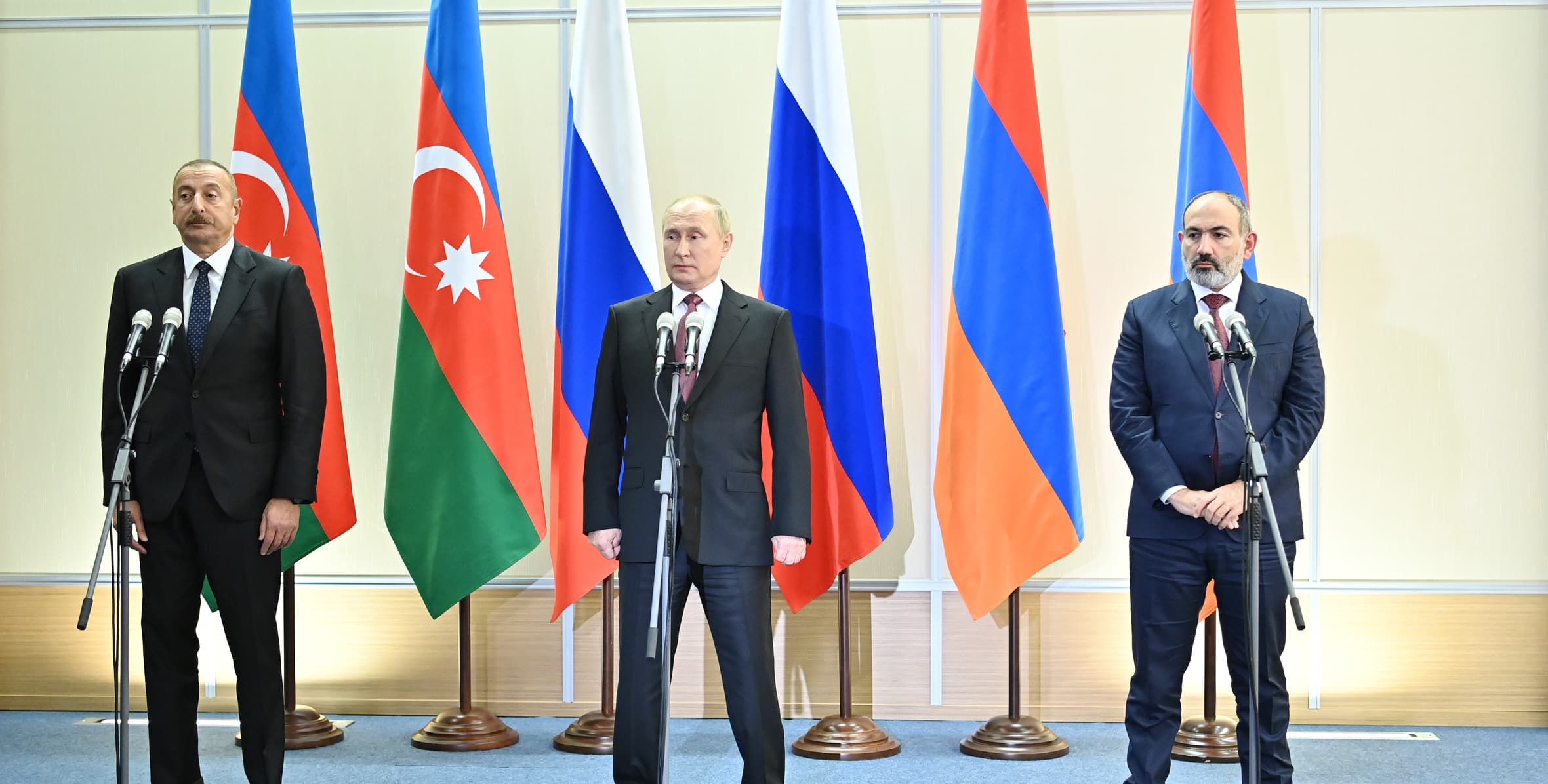
World Affairs & Geopolitics · Conflict & Security
Armenia-Azerbaijan Post-Karabakh Tensions
ConflictFrozen conflictSince 2020
A live assessment of how this issue works in practice—institutions, tradeoffs, and what would improve outcomes. Evidence accumulates in our Summa.
Background
Unsettled border, security, and corridor disputes after the Nagorno-Karabakh outcome
Why this remains an issue
- Large-scale hostilities have reduced, but border incidents and coercive signaling persist
- Displacement and return questions remain politically and legally contentious
- Transport corridor debates intersect with sovereignty and security concerns
- External mediators compete without a fully consolidated settlement track
Core fault lines
- Territorial control vs minority rights and security guarantees
- Normalization incentives vs unresolved grievance and accountability claims
- Regional connectivity vs sovereignty and coercion concerns
- Mediation plurality vs coherent settlement framework
At a glance
Origin
Roots trace to about 2020. Unsettled border, security, and corridor disputes after the Nagorno-Karabakh outcome
Why now
Large-scale hostilities have reduced, but border incidents and coercive signaling persist Displacement and return questions remain politically and legally contentious
What to watch next
What verification regime could reduce cross-border incident risk? How can transport corridor agreements avoid coercive interpretations?
Snapshot
Current signals
- Large-scale hostilities have reduced, but border incidents and coercive signaling persist
- Displacement and return questions remain politically and legally contentious
- Transport corridor debates intersect with sovereignty and security concerns
- External mediators compete without a fully consolidated settlement track
Analysis
Decision tradeoffs
- Territorial control vs minority rights and security guarantees
- Normalization incentives vs unresolved grievance and accountability claims
- Regional connectivity vs sovereignty and coercion concerns
- Mediation plurality vs coherent settlement framework
Working view
- Military outcomes alone do not produce durable political settlement
- Border stabilization requires verifiable mechanisms and communication channels
- Connectivity projects need explicit rights and security safeguards
- Competing mediation tracks can dilute leverage without coordination
Deep intelligence
What could change our mind
- What verification regime could reduce cross-border incident risk?
- How can transport corridor agreements avoid coercive interpretations?
- What guarantees are needed to sustain normalization over time?
- Which mediation format can align regional and external stakeholders effectively?
Related articles
Recent reporting tagged to this topic—read snapshots first, then open full analyses.