
European Union · Society & Governance
Migration, Asylum Pact & External Borders
Topic
A live assessment of whether Europe can combine external-border control, asylum fairness, solidarity, returns, legal pathways, and human dignity under the new Pact.
Last reviewed 2026-05-31 · reviewed against current official and high quality sources
OAP view
Europe’s migration test is whether it can make protection and control reinforce each other rather than collapse into either chaos or cruelty. The EU’s migration problem is not only the number of arrivals. It is the weakness of trust between member states, the uneven burden on border countries, slow asylum decisions, weak returns after final rejection, limited legal pathways, reliance on fragile third-country deals, and the moral cost of deaths at sea. The optimal path is high-capacity governed mobility: faster and fairer asylum, credible external-border management, mandatory but flexible solidarity, legal work and protection pathways, rights-monitored partnerships with origin and transit countries, and integration support where people are likely to stay. Border control without fairness will lose legitimacy; humanitarian rhetoric without capacity will lose consent.
Thesis
EU migration policy is moving from negotiation to implementation. The Pact on Migration and Asylum creates a new common framework, but the central test is practical and political: can Europe process claims faster, share responsibility, protect fundamental rights, manage external borders, return people lawfully after final rejection, and avoid turning migration into a permanent sovereignty and identity crisis?
The EU’s migration problem is not only the number of arrivals. It is the weakness of trust between member states, the uneven burden on border countries, slow asylum decisions, weak returns after final rejection, limited legal pathways, reliance on fragile third-country deals, and the moral cost of deaths at sea. The optimal path is high-capacity governed mobility: faster and fairer asylum, credible external-border management, mandatory but flexible solidarity, legal work and protection pathways, rights-monitored partnerships with origin and transit countries, and integration support where people are likely to stay. Border control without fairness will lose legitimacy; humanitarian rhetoric without capacity will lose consent.
Which EU migration system reduces irregularity and deaths while protecting asylum rights, sharing responsibility, enabling needed legal migration, and preserving democratic legitimacy?
Key numbers
Live civic-intelligence dashboard — judge integration by measurable performance, not posture.
- Pact full applicationMixedHigh confidenceJune 2026implementation phaseThe Commission reported in May 2026 that member states had advanced implementation, but continuous work was still needed before full application.Source: European Commission / Frontex· Verified 2026-05-31
- EU first-time asylum applicantsFallingHigh confidence669,365 in 2025down 26.6% from 912,425 in 2024First-time applicants made up 83.9% of all EU asylum applicants in 2025.Source: Eurostat annual asylum statistics· Verified 2026-05-31
- Total EU asylum applicantsFallingHigh confidence797,760 in 2025down from 2024The 2025 fall eased pressure, but the system remains politically sensitive and unevenly distributed.Source: Eurostat annual asylum statistics· Verified 2026-05-31
- Protection grantedFallingHigh confidence361,325 asylum seekers granted protection in 2025down 17.5% from 2024Protection decisions matter because asylum pressure is not only arrivals; it is also recognition, integration, and appeals capacity.Source: Eurostat asylum decisions statistics· Verified 2026-05-31
- First-time asylum applicants who were minorsRisingHigh confidence158,400 / 23.7% in 2025large child-protection burdenAmong minor first-time applicants, 13.3% were unaccompanied minors.Source: Eurostat, April 2026· Verified 2026-05-31
- Irregular external-border crossingsFallingHigh confidencejust over 178,000 in 2025down 26% from 2024; lowest since 2021Frontex detections are not the same as unique people; still, they are a key operational pressure signal.Source: Frontex InBrief 2025· Verified 2026-05-31
- Irregular crossings early 2026FallingMedium confidencejust over 28,500 in Jan-Apr 2026down 40% year-on-yearFrontex attributed the fall to cooperation with partner countries, preventive measures in departure states and weather conditions.Source: Frontex, May 2026· Verified 2026-05-31
- Mediterranean deaths and missingRisingMedium confidenceat least 2,185 in 2025still one of the world’s deadliest migration routesRecorded deaths understate the full human toll because many shipwrecks and disappearances are not fully verified.Source: IOM Missing Migrants Project / IOM news· Verified 2026-05-31
- Western Africa / Atlantic route deaths and missingRisingMedium confidence1,214 in 2025high-fatality route to EuropeRoute shifts can reduce one pressure point while increasing risk elsewhere.Source: IOM Missing Migrants Project / IOM news· Verified 2026-05-31
- Pact implementation building blocksMixedHigh confidence10 building blocksnational implementation under Commission monitoringImplementation involves member states, EU agencies, IT systems, reception capacity, screening, border procedures, solidarity and returns.Source: European Commission implementation page· Verified 2026-05-31
Definitions
Immigration debates mix categories. These terms are used consistently on this page.
- Pact on Migration and Asylum
- A package of EU rules for managing migration and establishing a common asylum system, adopted in 2024 and becoming fully applicable in June 2026 after implementation work.
- External border
- The EU/Schengen border with non-EU countries, including land borders, sea borders and airports.
- Irregular border crossing
- A detected crossing of the EU external border outside regular entry conditions. Frontex counts detections, not necessarily unique individuals.
- Asylum seeker
- A person requesting international protection whose claim has not yet received a final decision.
- Refugee status
- Protection granted to a person who meets the Refugee Convention criteria, generally based on persecution risk.
- Subsidiary protection
- Protection for people who do not qualify as refugees but face serious harm if returned, such as war or torture.
- Screening
- Initial checks at or near the external border, including identity, security, vulnerability and health-related checks under the new EU framework.
- Border procedure
- A faster asylum procedure conducted while an applicant is at or near the external border or in a controlled setting, usually for certain categories of claims.
- Solidarity mechanism
- A system for sharing responsibility among member states, including relocation, financial contributions and operational support.
- Return
- The process of returning a person without a legal right to stay after due process, ideally lawfully, safely and with safeguards.
- Externalisation
- A policy approach that shifts migration control or asylum-related functions to third countries through agreements, funding, border cooperation or processing arrangements.
At a glance
- 01
Origin
The Schengen area created shared external-border dependence, but asylum responsibilities and reception pressures remained unevenly distributed across member states.
- 02
Why now
The Pact becomes fully applicable in 2026, irregular crossings fell in 2025, asylum applications declined, but deaths at sea and political polarisation remain severe.
- 03
What to watch
Whether member states implement screening, border procedures, solidarity, reception capacity and returns without creating detention bottlenecks or rights failures.
- 04
OAP thesis
Europe needs high-capacity governed mobility: fair asylum, credible borders, shared responsibility, lawful returns, legal pathways and rights-monitored external partnerships.
Migration routes & pressures
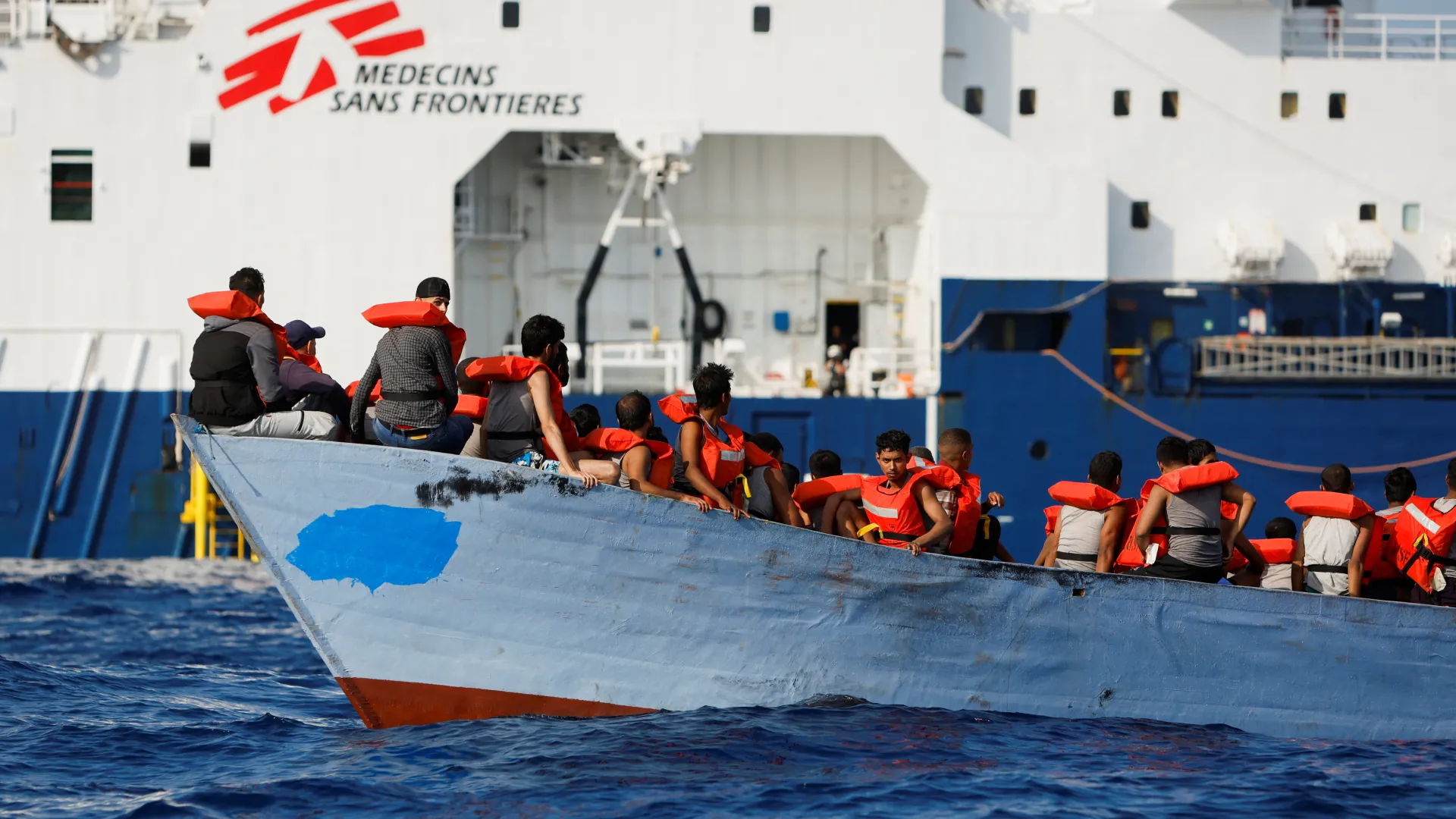
Central Mediterranean, Western Mediterranean/Atlantic, Eastern Mediterranean, Western Balkans, eastern land borders, and airport channels each create different humanitarian, legal and political pressures for the Pact.
Central Mediterranean
- Scale
- High humanitarian and political salience, linked to Libya, Tunisia, Italy, Malta and search-and-rescue disputes.
- Policy problem
- Deaths at sea, smuggling networks, detention abuse in transit countries and Italy/EU burden disputes.
OAP note Pact screening, solidarity, SAR coordination, returns and rights monitoring must be route-specific.
Western Mediterranean and Atlantic / Canary Islands
- Scale
- Connected to Morocco, Mauritania, Senegal, the Sahel and Spain’s border-management diplomacy.
- Policy problem
- Longer sea routes can become extremely deadly when enforcement shifts movement away from closer crossings.
OAP note Pact screening, solidarity, SAR coordination, returns and rights monitoring must be route-specific.
Eastern Mediterranean
- Scale
- Linked to Turkey, Greece, Cyprus, Syria, Afghanistan and regional conflict dynamics.
- Policy problem
- EU-Turkey dependency, island reception pressure, pushback allegations and legal challenges.
OAP note Pact screening, solidarity, SAR coordination, returns and rights monitoring must be route-specific.
Western Balkans
- Scale
- Land route pressure through non-EU Balkan states toward Central and Western Europe.
- Policy problem
- Secondary movements, border fencing, police violence allegations and asylum forum-shopping disputes.
OAP note Pact screening, solidarity, SAR coordination, returns and rights monitoring must be route-specific.
Eastern land borders
- Scale
- Belarus/Russia-related instrumentalisation risk affecting Poland, Lithuania, Latvia and Finland.
- Policy problem
- Hybrid warfare framing can weaken asylum safeguards if all movement is treated as security attack.
OAP note Pact screening, solidarity, SAR coordination, returns and rights monitoring must be route-specific.
Airports and visa-overstay channels
- Scale
- Less visible politically but important for asylum claims, overstays and document abuse.
- Policy problem
- Policy focuses on boats while other channels produce administrative pressure.
OAP note Pact screening, solidarity, SAR coordination, returns and rights monitoring must be route-specific.
Data · Asylum applications & protection (2025)
| Signal | Latest useful figure | Why it matters |
|---|---|---|
| EU first-time asylum applicants | 669,365 in 2025 | First-time applicants made up 83.9% of all EU asylum applicants in 2025. |
| Total EU asylum applicants | 797,760 in 2025 | The 2025 fall eased pressure, but the system remains politically sensitive and unevenly distributed. |
| Protection granted | 361,325 asylum seekers granted protection in 2025 | Protection decisions matter because asylum pressure is not only arrivals; it is also recognition, integration, and appeals capacity. |
| First-time asylum applicants who were minors | 158,400 / 23.7% in 2025 | Among minor first-time applicants, 13.3% were unaccompanied minors. |
Data · Borders, deaths & Pact implementation
| Signal | Latest useful figure | Why it matters |
|---|---|---|
| Pact full application | June 2026 | The Commission reported in May 2026 that member states had advanced implementation, but continuous work was still needed before full application. |
| Irregular external-border crossings | just over 178,000 in 2025 | Frontex detections are not the same as unique people; still, they are a key operational pressure signal. |
| Irregular crossings early 2026 | just over 28,500 in Jan-Apr 2026 | Frontex attributed the fall to cooperation with partner countries, preventive measures in departure states and weather conditions. |
| Mediterranean deaths and missing | at least 2,185 in 2025 | Recorded deaths understate the full human toll because many shipwrecks and disappearances are not fully verified. |
| Western Africa / Atlantic route deaths and missing | 1,214 in 2025 | Route shifts can reduce one pressure point while increasing risk elsewhere. |
| Pact implementation building blocks | 10 building blocks | Implementation involves member states, EU agencies, IT systems, reception capacity, screening, border procedures, solidarity and returns. |
Asylum capacity & EU institutional architecture
The Pact on Migration and Asylum becomes fully applicable in June 2026, but capacity—not legislation—is the binding constraint. Member states must run screening, border procedures, reception, appeals, solidarity transfers and returns while Frontex, EUAA, courts and cities absorb operational pressure. Deaths at sea remain high even as detected crossings fall; external partnerships reduce arrivals but raise rights and leverage risks.
| Signal | Figure / metric | Why it matters |
|---|---|---|
| Pact full application | June 2026 | The Commission reported in May 2026 that member states had advanced implementation, but continuous work was still needed before full application. |
| EU first-time asylum applicants | 669,365 in 2025 | First-time applicants made up 83.9% of all EU asylum applicants in 2025. |
| Total EU asylum applicants | 797,760 in 2025 | The 2025 fall eased pressure, but the system remains politically sensitive and unevenly distributed. |
| Protection granted | 361,325 asylum seekers granted protection in 2025 | Protection decisions matter because asylum pressure is not only arrivals; it is also recognition, integration, and appeals capacity. |
| First-time asylum applicants who were minors | 158,400 / 23.7% in 2025 | Among minor first-time applicants, 13.3% were unaccompanied minors. |
| Irregular external-border crossings | just over 178,000 in 2025 | Frontex detections are not the same as unique people; still, they are a key operational pressure signal. |
Capacity pressures
- Uneven national reception, court and staffing capacity
- Frontline states carrying disproportionate operational burden
- Weak returns after final rejection without origin-country cooperation
- Deaths at sea and pushback allegations undermining legitimacy
- Externalisation dependency on partners with weak rights standards
- Local integration costs falling on cities without adequate funding
Policy directionThe EU should implement the Pact as a capacity project, not only a control project: faster decisions, credible solidarity, lawful returns, legal pathways, rights-monitored partnerships, and real local integration capacity.
What is really at stake
The visible debate
Border control versus asylum protection; frontline burden versus interior solidarity; returns versus rights.
The deeper debate
Which EU migration system reduces irregularity and deaths while protecting asylum rights, sharing responsibility, enabling needed legal migration, and preserving democratic legitimacy?
The institutional test
Can the Pact make protection and control reinforce each other through capacity, solidarity, lawful returns and legal pathways—not chaos or cruelty?
Core fault lines
Control vs protection
The EU wants credible border management, but asylum is a legal right and cannot be reduced to deterrence.
OAP view
Control and protection are not opposites when institutions work; they become opposites when capacity collapses.
Frontline states vs interior states
Border states carry reception and processing burdens, while many asylum seekers aim to move onward to northern and western Europe.
OAP view
Solidarity must be operational, not symbolic; otherwise Schengen becomes politically fragile.
Speed vs due process
Faster screening and border procedures can reduce limbo, but speed can also undermine fair hearings if safeguards are weak.
OAP view
Fast-and-fair is the target; fast-but-crude will produce legal and moral failure.
Returns vs rights
A system without lawful returns loses public credibility, but returns cannot violate non-refoulement or human dignity.
OAP view
Returns after final rejection are legitimate only when asylum procedures were fair, individualized and reviewable.
External partnerships vs outsourcing risk
Deals with transit countries can reduce crossings but may expose migrants to abuse and give third countries leverage over Europe.
OAP view
External cooperation is necessary, but should be rights-monitored, transparent and not a substitute for EU responsibility.
Legal pathways vs pull-factor fears
Legal work, study, family and protection pathways can reduce irregularity, but governments fear they will be framed as incentives.
OAP view
Without legal pathways, Europe leaves too much migration governance to smugglers.
Security framing vs human reality
Some migration flows intersect with security risks and hybrid coercion, but most people are fleeing poverty, conflict, climate stress, persecution or instability.
OAP view
Security screening should be specific and rigorous; collective suspicion corrodes legitimacy.
Migration governance outcomes to track
Entry numbers matter less than what happens after arrival — employment, schools, housing, discrimination, and trust.
Implementation capacity
Score 6/10
What this meansThe Pact creates a clearer framework, but national asylum, reception, IT, court and return systems remain uneven.
Success metricSee watch list and high-capacity governed mobility package
Solidarity credibility
Score 5/10
What this meansThe new mechanism is stronger than the old system, but whether it meaningfully relieves frontline pressure remains unproven.
Success metricSee watch list and high-capacity governed mobility package
Border-control credibility
Score 7/10
What this meansDetected irregular crossings fell in 2025 and early 2026, and Frontex capacity is significant, but route displacement and rights risks persist.
Success metricSee watch list and high-capacity governed mobility package
Rights and dignity risk
Score 8/10
What this meansDeaths at sea, pushback allegations, detention risks and externalisation concerns make fundamental-rights legitimacy a central vulnerability.
Success metricSee watch list and high-capacity governed mobility package
Bottlenecks
European Commission / DG HOME
StrainMust make a complex compromise operational across very different national systems.
Reform directionCoordinates Pact implementation, monitors national plans, proposes legislation and manages migration partnerships.
Council of the European Union
StrainMember states agree on border control more easily than on relocation and responsibility-sharing.
Reform directionRepresents member-state governments and balances control, solidarity, sovereignty and political acceptability.
European Parliament
StrainParliamentary groups are deeply divided between rights protection, border control and backlash politics.
Reform directionCo-legislates and scrutinizes asylum, border and rights rules.
Frontex
StrainMust balance effectiveness with fundamental-rights compliance and accountability.
Reform directionSupports external-border management, risk analysis, returns and operational coordination.
European Union Agency for Asylum
StrainAgency support cannot compensate for all national reception, court and staffing gaps.
Reform directionSupports member states with asylum operations, training, analysis and implementation of the common asylum system.
Member states
StrainImplementation capacity and political incentives vary sharply across countries.
Reform directionRun asylum procedures, reception systems, returns, integration policies and border operations.
Courts and fundamental-rights bodies
StrainLegal checks can be framed as obstruction when political systems demand speed.
Reform directionEnforce EU law, human rights, non-refoulement and procedural safeguards.
Third countries
StrainThey can use cooperation as leverage and may not meet EU rights standards.
Reform directionOrigin and transit states cooperate on readmission, border management, anti-smuggling and development partnerships.
Cities and local authorities
StrainLocal capacity is often where European migration policy becomes socially real.
Reform directionAbsorb reception, shelter, schools, healthcare, integration and public-order pressures.
NGOs and humanitarian actors
StrainOften operate amid criminalisation debates, funding shortages and political hostility.
Reform directionProvide rescue, legal aid, monitoring, integration support and rights advocacy.
Current signals
- 1
Pact implementation phase
The Pact on Migration and Asylum has moved from legislative compromise to implementation, with full application due in June 2026.
- 2
Asylum applications down in 2025
EU first-time asylum applications fell sharply in 2025, according to Eurostat, but volumes remain high enough to require serious administrative capacity.
- 3
Frontex crossings down
Frontex reported a 26% fall in irregular external-border crossings in 2025 and a further 40% fall in the first four months of 2026.
- 4
Deaths vs fewer detections
Lower detected crossings do not automatically mean safer routes; IOM data still show thousands dead or missing on routes to Europe.
- 5
Solidarity mechanism
The solidarity mechanism is the political heart of the Pact: if relocation, financial support and operational support do not work, frontline states will lose trust.
- 6
Returns credibility
Returns after final rejection remain central to credibility, but returns policy is limited by origin-country cooperation, legal safeguards, documentation and diplomacy.
- 7
External partnerships risk
External partnerships with Tunisia, Libya, Turkey, Egypt, Morocco and others remain politically attractive but create rights, dependency and leverage risks.
- 8
ETIAS and Entry/Exit System
ETIAS and the Entry/Exit System are part of the wider border-management shift toward digital control and pre-travel screening.
Policy options
Compare approaches by upside, risk, and who bears the cost — not by slogan.
| Option | Upside | Risk | Who benefits | Who bears cost | OAP assessment |
|---|---|---|---|---|---|
| Strict border-first implementation | May reduce irregular crossings and reassure voters that rules are enforceable. | Can create rights violations, overcrowded border facilities and route displacement if protection safeguards and legal pathways are weak. | border-control advocates; interior governments under voter pressure; Frontex operational capacity | asylum seekers; frontline regions; rights institutions | Necessary component of a governed system; capacity is the constraint. |
| Fast-and-fair asylum capacity surge | Reduces limbo, improves trust and makes returns after final rejection more legitimate. | Requires courts, staff, interpreters, legal aid, reception capacity and digital systems that many states lack. | genuine refugees; local services; voters seeking order; frontline states | public budgets; administrations needing reform | Necessary component of a governed system; capacity is the constraint. |
| Mandatory solidarity with relocation priority | Directly shares people and pressure rather than only money. | Politically explosive in states opposed to relocation; may face non-compliance or symbolic participation. | frontline states; asylum seekers in overcrowded systems; Schengen trust | reluctant interior states; local authorities receiving arrivals | Politically explosive unless paired with registration and border credibility. |
| Flexible solidarity with money and operational support | More politically feasible than relocation-only mechanisms. | Can become a pay-to-avoid-responsibility system that fails to relieve pressure on the ground. | reluctant member states; EU agencies; some frontline operations | frontline states if relocation remains limited; asylum seekers in pressured systems | Politically feasible in parts but needs pairing with control credibility. |
| External partnerships with transit/origin countries | Can reduce departures, disrupt smuggling and improve readmission cooperation. | Can outsource harm, empower authoritarian partners and make Europe vulnerable to migration blackmail. | EU governments seeking lower arrivals; partner-country security services; some development projects | migrants in transit; human-rights credibility; EU leverage if partners defect | Necessary component of a governed system; capacity is the constraint. |
| Expanded legal pathways and labour-migration channels | Reduces reliance on smugglers and helps Europe manage demographic and labour shortages. | Politically vulnerable if voters see irregular migration still uncontrolled. | employers; migrants with skills; ageing societies; origin-country remittances | restrictionist parties; low-wage workers if protections are weak | Politically feasible in parts but needs pairing with control credibility. |
| Rights-centered rescue and reception expansion | Reduces deaths and legal exposure while restoring moral credibility. | Can be framed as a pull factor if not paired with processing and anti-smuggling strategy. | people at sea; humanitarian actors; rights institutions | governments facing deterrence politics; frontline reception systems | Politically feasible in parts but needs pairing with control credibility. |
| High-capacity governed mobility (OAP preferred) | Fast fair asylum, operational solidarity, border control with rescue, lawful returns, legal pathways, audited external partnerships, local integration funding. | Requires trust across member states, courts, agencies, cities and third countries under polarised politics. | Frontline states, genuine refugees, voters seeking order with dignity, Schengen cohesion | Smugglers; actors relying on chaos, cruelty or symbolic solidarity | Preferred: see package below. |
Who opposes this
A serious package must name resistance—not pretend consensus exists.
Frontline member states
Likely objectionThe Pact still leaves too much responsibility at the first point of entry.
OAP response
Their concern is valid unless solidarity becomes operational enough to relieve real reception and processing pressure.
Interior and northern member states
Likely objectionRelocation encourages secondary movements and reduces incentives for border control.
OAP response
Solidarity should be paired with credible registration, processing and responsibility rules, not treated as a substitute for control.
Human-rights groups
Likely objectionBorder procedures and externalisation will undermine asylum rights.
OAP response
That risk is real; rights monitoring, legal aid, vulnerability screening and transparency must be core implementation metrics.
Restrictionist and far-right parties
Likely objectionThe Pact is not tough enough and still allows too much migration.
OAP response
A serious system should reduce irregularity through capacity and lawful process, not through blanket suspicion or rights erosion.
Business and labour-shortage sectors
Likely objectionEurope needs workers, not only border control.
OAP response
Correct; legal pathways and credential/useful work integration should be part of the migration system.
Third-country partners
Likely objectionEurope demands cooperation while offering insufficient legal mobility, development support or political respect.
OAP response
Durable partnerships require mutual benefit, not simply paying countries to block movement.
Local governments
Likely objectionNational and EU leaders make migration decisions while cities pay the operational costs.
OAP response
Cities are core infrastructure in migration governance and should be funded accordingly.
OAP package
High-capacity governed mobility
The EU should implement the Pact as a capacity project, not only a control project: faster decisions, credible solidarity, lawful returns, legal pathways, rights-monitored partnerships, and real local integration capacity.
The EU should implement the Pact as a capacity project, not only a control project: faster decisions, credible solidarity, lawful returns, legal pathways, rights-monitored partnerships, and real local integration capacity.
- 1
Make asylum fast and legally serious
Main blockerStaffing, courts, political impatience and uneven national capacity.
Invest in decision-makers, interpreters, legal aid, digital files, appeals capacity, vulnerability screening and quality control so faster procedures remain fair.
- Invest in decision-makers, interpreters, legal aid, digital files, appeals capacity, vulnerability screening and quality control so faster procedures remain fair.
- 2
Make solidarity visible and operational
Main blockerMember states disagree over whether solidarity should mean people, money or border support.
Use relocation where needed, but also deploy money, personnel, reception support and EU agency capacity in ways that visibly reduce frontline pressure.
- Use relocation where needed, but also deploy money, personnel, reception support and EU agency capacity in ways that visibly reduce frontline pressure.
- 3
Pair border control with rescue and rights monitoring
Main blockerGovernments often see rights monitoring as politically inconvenient during high-pressure periods.
External-border control should include transparent fundamental-rights monitoring, search-and-rescue coordination and accountability for pushback or abuse allegations.
- External-border control should include transparent fundamental-rights monitoring, search-and-rescue coordination and accountability for pushback or abuse allegations.
- 4
Make returns lawful, targeted and credible
Main blockerOrigin-country cooperation, legal safeguards, identity documentation and political mistrust.
After final rejection, returns should be faster where safe and legal, supported by documentation, readmission diplomacy and reintegration help when appropriate.
- After final rejection, returns should be faster where safe and legal, supported by documentation, readmission diplomacy and reintegration help when appropriate.
- 5
Expand legal pathways where Europe has real needs
Main blockerGovernments fear legal pathways will be framed as weakness unless irregular routes are also controlled.
Build regulated labour, study, humanitarian admission, resettlement and family channels so mobility is not left entirely to smugglers.
- Build regulated labour, study, humanitarian admission, resettlement and family channels so mobility is not left entirely to smugglers.
- 6
Audit external partnerships
Main blockerEU governments often prioritize reduced arrivals over uncomfortable rights evidence.
Tie funding and border cooperation with third countries to transparent monitoring of detention conditions, non-refoulement, anti-smuggling performance and development outcomes.
- Tie funding and border cooperation with third countries to transparent monitoring of detention conditions, non-refoulement, anti-smuggling performance and development outcomes.
- 7
Treat cities as migration infrastructure
Main blockerEU migration debates are national and border-focused, while integration costs are local.
Fund local housing, schools, healthcare, language training, employment services and public-order capacity where reception and integration actually happen.
- Fund local housing, schools, healthcare, language training, employment services and public-order capacity where reception and integration actually happen.
Not this
- Open-ended humanitarian rhetoric that ignores state capacity, voter consent and uneven pressure on border states.
- Fortress Europe politics that treats deterrence as success even when people die, smugglers profit, and rights are outsourced.
- Solidarity language that leaves Italy, Greece, Spain, Cyprus, Malta and frontline states carrying disproportionate operational burdens.
- Technocratic pact optimism that assumes new rules will work without staffing, reception capacity, courts, data systems, returns agreements, and trust.
OAP working view
Europe should implement the Pact as high-capacity governed mobility—not fortress politics or open-ended rhetoric.
Judge success by faster fair decisions, visible solidarity at frontline states, falling deaths alongside controlled irregularity, lawful returns after final rejection, expanded legal pathways, rights-monitored partnerships, and funded local integration.
The central failure mode is a control-only Pact that creates detention bottlenecks and rights scandals, or humanitarian language without staffing, courts and returns credibility.
Policy performance dashboard
What good looks like vs failure mode — by policy area.
| Policy area | What good would look like | Failure mode |
|---|---|---|
| Central Mediterranean | Coordinated SAR, fair screening, solidarity relief, rights-monitored partnerships | Deaths at sea, smuggling networks, detention abuse in transit countries and Italy/EU burden disputes. |
| Western Mediterranean and Atlantic / Canary Islands | Coordinated SAR, fair screening, solidarity relief, rights-monitored partnerships | Longer sea routes can become extremely deadly when enforcement shifts movement away from closer crossings. |
| Eastern Mediterranean | Coordinated SAR, fair screening, solidarity relief, rights-monitored partnerships | EU-Turkey dependency, island reception pressure, pushback allegations and legal challenges. |
| Western Balkans | Coordinated SAR, fair screening, solidarity relief, rights-monitored partnerships | Secondary movements, border fencing, police violence allegations and asylum forum-shopping disputes. |
| Eastern land borders | Coordinated SAR, fair screening, solidarity relief, rights-monitored partnerships | Hybrid warfare framing can weaken asylum safeguards if all movement is treated as security attack. |
| Airports and visa-overstay channels | Coordinated SAR, fair screening, solidarity relief, rights-monitored partnerships | Policy focuses on boats while other channels produce administrative pressure. |
What we would watch next
- 1
Pact go-live in June 2026
Do screening, border procedures, solidarity and reception systems work operationally, or do bottlenecks appear immediately? The Pact’s legitimacy depends on implementation, not legislative passage.
- 2
Solidarity contributions
Do reluctant member states provide meaningful relocation, money or operational support? If solidarity is symbolic, frontline states will lose confidence in the system.
- 3
Border procedure safeguards
Are fast procedures paired with legal aid, vulnerability screening, appeals and humane conditions? Speed without fairness will produce litigation, moral failure and mistrust.
- 4
Mediterranean and Atlantic deaths
Do fewer crossings actually reduce deaths, or do routes become longer and more dangerous? A control policy that shifts people into deadlier routes is not success.
- 5
Returns after final rejection
Do lawful returns improve without violating non-refoulement or relying on abusive partner states? Return credibility is central to public consent, but rights violations undermine legitimacy.
- 6
External partner leverage
Do Tunisia, Libya, Turkey, Egypt, Morocco or others use migration cooperation as bargaining power? Externalisation can reduce arrivals while increasing EU vulnerability.
- 7
Local integration pressure
Are cities receiving enough resources for shelter, schools, health, employment and public order? Migration governance fails where local systems collapse.
- 8
Far-right electoral framing
Does the Pact reduce political temperature, or does it become proof for both sides that Europe is failing? Migration policy survives only if it can restore some cross-border public trust.
Mind changers
Specific measurable indicators — not vibes.
More optimistic if
- The Pact goes live without major reception or rights crises at external borders.
- Frontline states report measurable relief from solidarity contributions.
- Asylum decision times fall while appeal success and rights safeguards remain credible.
- Mediterranean and Atlantic deaths fall alongside crossings, not because routes become invisible.
- Returns after final rejection improve through lawful readmission cooperation.
- Legal labour and humanitarian pathways expand in ways that reduce smuggler dependency.
- External partnerships include enforceable rights monitoring and transparent reporting.
- Cities and regions receive practical integration support before local services are overwhelmed.
More pessimistic if
- Border procedures create overcrowded camps, detention bottlenecks or rushed decisions.
- Member states choose symbolic payments instead of meaningful solidarity.
- Deaths at sea remain high or shift to less visible routes.
- External deals reduce arrivals while exposing migrants to abuse or refoulement.
- Returns remain weak, feeding voter belief that the system has no consequences.
- Legal pathways stagnate while Europe continues to need migrant labour.
- Frontex or national authorities face renewed rights scandals without credible accountability.
- Migration becomes a stable far-right mobilisation engine even when arrivals fall.
OAP scorecard
- Implementation capacity6/10
The Pact creates a clearer framework, but national asylum, reception, IT, court and return systems remain uneven.
- Solidarity credibility5/10
The new mechanism is stronger than the old system, but whether it meaningfully relieves frontline pressure remains unproven.
- Border-control credibility7/10
Detected irregular crossings fell in 2025 and early 2026, and Frontex capacity is significant, but route displacement and rights risks persist.
- Rights and dignity risk8/10
Deaths at sea, pushback allegations, detention risks and externalisation concerns make fundamental-rights legitimacy a central vulnerability.
- Political temperature9/10
Migration remains one of the most polarising issues in European politics and is heavily used by far-right and sovereigntist parties.
- Return-system credibility5/10
Returns after final rejection are central to public consent but remain operationally and diplomatically difficult.
- Evidence confidence8/10
Eurostat, Frontex, EUAA, Commission and IOM provide strong headline data; deaths, pushbacks and hidden routes are harder to measure.
- Policy solvability6/10
A better system is conceptually clear, but it requires difficult coordination across borders, courts, cities, agencies and third countries.
Sources
Official statistics, EU institutions, and selected expert analysis used for this profile.
- European Commission — Pact on Migration and Asylum
- European Commission — May 2026 Pact implementation progress report
- European Commission — Implementing the Pact on Migration and Asylum
- Eurostat — annual asylum applications statistics
- Eurostat — first-time asylum applications fell 27% in 2025
- Eurostat — minors among first-time asylum applicants in 2025
- Eurostat — asylum decisions annual statistics
- Frontex — InBrief 2025
- Frontex — irregular crossings down 26% in 2025
- Frontex — irregular crossings down 40% in first four months of 2026
- IOM — 21 migrants died every day in 2025
- IOM Missing Migrants Project — Europe
- EUAA — latest asylum trends annual analysis
- European Policy Centre — EU Migration Pact 2026 implementation discussion
Related articles
Recent reporting tagged to this topic—read snapshots first, then open full analyses.