
European Union · Society & Governance
Rule of Law & Democratic Conditionality
Topic
A live assessment of how Europe defends judicial independence, anti-corruption safeguards, media freedom, checks and balances, and democratic accountability through law, money and membership pressure.
Last reviewed 2026-05-31 · reviewed against current official and high quality sources
OAP view
The EU’s rule-of-law challenge is whether a union of democracies can remain a union of democracies when one government can capture institutions from inside. The EU’s rule-of-law problem is not only democratic backsliding in a few member states. It is the structural tension between a union built on mutual trust and national governments that can capture courts, public media, prosecutors, procurement systems and election rules while still accessing EU money and decision rights. The optimal path is principled conditionality: clear standards, faster enforcement, independent evidence, proportional funding freezes, protection for end beneficiaries, credible paths back to compliance, and equal scrutiny across all member states. Conditionality must be strict enough to change incentives, but transparent enough not to look like Brussels punishing political enemies.
Thesis
EU rule-of-law policy has moved from soft monitoring to financial conditionality. The Union now uses annual rule-of-law reports, Article 7 procedures, infringement cases, recovery-fund milestones, cohesion-policy conditions and the conditionality regulation to pressure member states that weaken courts, anti-corruption systems, media freedom or checks and balances. The core test is whether Europe can defend democratic standards without turning enforcement into partisan bargaining or selective punishment.
The EU’s rule-of-law problem is not only democratic backsliding in a few member states. It is the structural tension between a union built on mutual trust and national governments that can capture courts, public media, prosecutors, procurement systems and election rules while still accessing EU money and decision rights. The optimal path is principled conditionality: clear standards, faster enforcement, independent evidence, proportional funding freezes, protection for end beneficiaries, credible paths back to compliance, and equal scrutiny across all member states. Conditionality must be strict enough to change incentives, but transparent enough not to look like Brussels punishing political enemies.
Which enforcement architecture protects EU values and money while preserving democratic consent, national equality and a credible route back to compliance?
Key numbers
Live civic-intelligence dashboard — judge integration by measurable performance, not posture.
- Annual Rule of Law ReportRisingHigh confidence2025 report published 8 July 2025sixth annual cycleThe report covers all 27 member states and examines justice systems, anti-corruption, media pluralism and checks and balances.Source: European Commission· Verified 2026-05-31
- Rule-of-law report pillarsStableHigh confidence4 pillarsstable monitoring architectureJustice systems, anti-corruption frameworks, media pluralism/freedom, and other institutional checks and balances.Source: European Commission· Verified 2026-05-31
- Conditionality regulationStableHigh confidencein force since January 2021budget-protection layer now part of EU enforcementApplies where rule-of-law breaches affect or seriously risk affecting EU financial interests.Source: European Commission· Verified 2026-05-31
- Article 7 against HungaryStableHigh confidencetriggered in 2018; still ongoing as of Council timeline reviewlong-running enforcement testThe European Parliament triggered Article 7(1) against Hungary in September 2018; the Council timeline says the procedure is still ongoing after multiple hearings.Source: Council of the EU Article 7 timeline· Verified 2026-05-31
- Article 7 against PolandMixedHigh confidencetriggered in 2017; procedure ended May 2024example of partial recovery pathThe Commission withdrew its reasoned proposal after analysing Poland’s action plan and commitments.Source: Council of the EU Article 7 timeline· Verified 2026-05-31
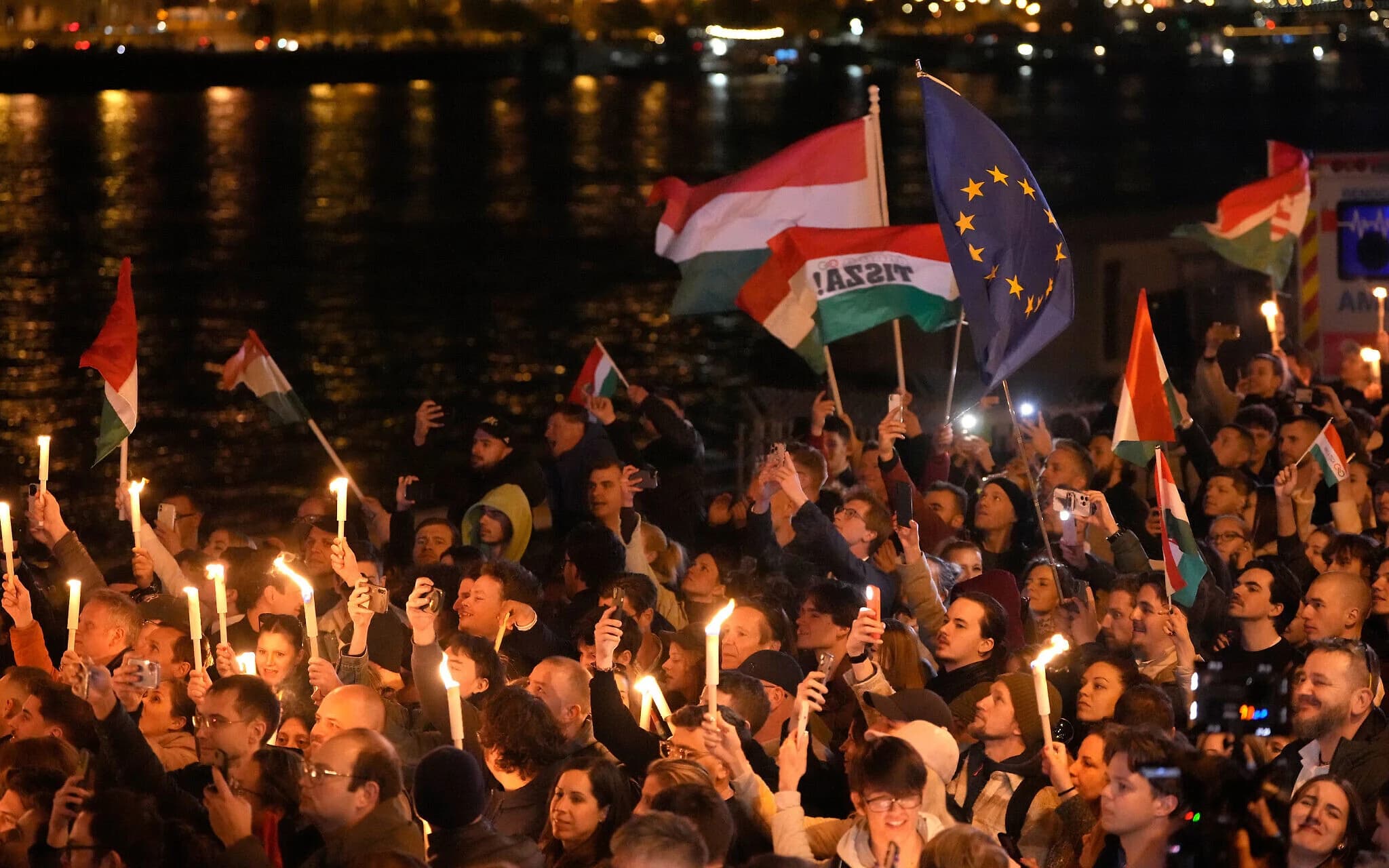
- Hungary frozen funds scaleMixedMedium confidencearound €36bn previously frozen under multiple instrumentspartially unlocked after reform commitments in 2026The exact frozen-access amount depends on instrument and timing; the key point is that rule-of-law conditionality became financially material.Source: Verfassungsblog / Reuters / AP synthesis· Verified 2026-05-31
- Hungary 2026 release agreementStableMedium confidence€16.4bn agreed for release after reformsconditional re-entry pathReported agreement followed reforms by Hungary’s new government, including anti-corruption and transparency steps; formal approvals and remaining conditions may still matter.Source: Reuters / AP reporting· Verified 2026-05-31
- Poland and Hungary fund suspension precedentStableMedium confidencelate-2022 conditionality/funding suspensionsfinancial enforcement became centralCER notes the Commission deployed rule-of-law-related funding tools against Poland and Hungary, prompting legal changes but not always full remediation.Source: Centre for European Reform· Verified 2026-05-31
- EU enlargement linkRisingHigh confidencerule-of-law standards central to accession credibilityincreasingly important with Ukraine, Moldova and Western BalkansThe Commission has increasingly linked rule-of-law monitoring to enlargement credibility and democratic resilience.Source: European Commission Rule of Law Report framework· Verified 2026-05-31
- EU values baselineStableHigh confidenceArticle 2 TEUconstitutional foundation of enforcementArticle 2 anchors the legal and political basis for defending democracy, rule of law and fundamental rights.Source: Treaty on European Union / EU institutions· Verified 2026-05-31
Definitions
Immigration debates mix categories. These terms are used consistently on this page.
- Rule of law
- A constitutional principle requiring legality, legal certainty, independent and impartial courts, effective judicial review, separation of powers, equality before the law and protection against arbitrary power.
- Article 2 TEU
- The Treaty provision listing the EU’s foundational values, including human dignity, freedom, democracy, equality, the rule of law and human rights.
- Article 7 TEU
- The EU Treaty procedure for addressing a clear risk of serious breach, or a serious and persistent breach, of EU values by a member state, potentially leading to recommendations or suspension of rights.
- Rule of Law Report
- The Commission’s annual monitoring cycle assessing justice systems, anti-corruption frameworks, media pluralism and checks and balances across all member states.
- Rule-of-law conditionality regulation
- The EU budget-protection tool in force since January 2021 that allows measures when rule-of-law breaches affect or risk affecting the EU’s financial interests.
- Conditionality
- Linking access to EU funds, approvals, milestones or rights to compliance with legal or governance standards.
- Super milestones
- Essential reform milestones attached to EU recovery funding, often used to ensure judicial-independence or anti-corruption reforms before funds are released.
- End beneficiaries
- Citizens, students, researchers, firms, municipalities or civil-society actors intended to receive EU-funded support even when national-government access is restricted.
- Democratic backsliding
- The gradual weakening of democracy through captured institutions, politicised courts, restrictions on media or civil society, unfair election conditions and reduced checks on executive power.
- Mutual trust
- The assumption that member states’ legal and judicial systems are sufficiently independent and rights-respecting for EU law, cross-border cooperation and single-market governance to function.
At a glance
- 01
Origin
The EU assumed member states would remain liberal democracies after accession, but institutional capture inside a member state exposed weak enforcement tools.
- 02
Why now
EU funds, recovery plans, enlargement, Hungary’s reform-linked unfreezing, Poland’s post-2023 repair path and growing populist pressure make conditionality a live constitutional question.
- 03
What to watch
Whether conditionality changes institutions durably or simply creates transactional compliance to unlock funds.
- 04
OAP thesis
The EU needs principled conditionality: clear standards, material consequences, protected beneficiaries, equal scrutiny and credible routes back to compliance.
Rule-of-law risk map
Judicial independence, anti-corruption, media pluralism, civil society, election integrity, and budget leverage are where institutional capture threatens EU mutual trust and EU funds.
Judicial independence
- Scale
- EU law depends on national courts that are independent enough to apply it and protect rights.
- Policy problem
- Annual Rule of Law Report, Article 7, conditionality regulation, infringement cases, super milestones
OAP note Court capture turns mutual trust into fiction and weakens the single market, extradition, asylum cooperation and rights enforcement.
Anti-corruption and public procurement
- Scale
- EU funds flow through national systems; corruption can turn EU money into patronage.
- Policy problem
- Annual Rule of Law Report, Article 7, conditionality regulation, infringement cases, super milestones
OAP note Taxpayers in other member states fund clientelism and lose trust in EU solidarity.
Media pluralism
- Scale
- Democratic competition requires voters to access independent information and scrutinize power.
- Policy problem
- Annual Rule of Law Report, Article 7, conditionality regulation, infringement cases, super milestones
OAP note State-aligned media capture creates elections that remain formal but become less meaningfully fair.
Civil society and academic freedom
- Scale
- NGOs, universities, researchers and rights groups provide accountability outside party politics.
- Policy problem
- Annual Rule of Law Report, Article 7, conditionality regulation, infringement cases, super milestones
OAP note Governments use sovereignty or foreign-agent rhetoric to delegitimize independent oversight.
Election integrity and institutional checks
- Scale
- Democracy requires more than voting: electoral rules, oversight bodies and checks on executive power must remain credible.
- Policy problem
- Annual Rule of Law Report, Article 7, conditionality regulation, infringement cases, super milestones
OAP note Incumbents tilt the playing field while claiming democratic mandate.
Budget leverage
- Scale
- EU money is the most tangible enforcement lever available short of voting-rights sanctions.
- Policy problem
- Annual Rule of Law Report, Article 7, conditionality regulation, infringement cases, super milestones
OAP note Conditionality becomes bargaining theater if funds are frozen and unfrozen without transparent benchmarks.
Data · Monitoring & legal framework
| Signal | Latest useful figure | Why it matters |
|---|---|---|
| Annual Rule of Law Report | 2025 report published 8 July 2025 | The report covers all 27 member states and examines justice systems, anti-corruption, media pluralism and checks and balances. |
| Rule-of-law report pillars | 4 pillars | Justice systems, anti-corruption frameworks, media pluralism/freedom, and other institutional checks and balances. |
| Conditionality regulation | in force since January 2021 | Applies where rule-of-law breaches affect or seriously risk affecting EU financial interests. |
| Article 7 against Hungary | triggered in 2018; still ongoing as of Council timeline review | The European Parliament triggered Article 7(1) against Hungary in September 2018; the Council timeline says the procedure is still ongoing after multiple hearings. |
| Article 7 against Poland | triggered in 2017; procedure ended May 2024 | The Commission withdrew its reasoned proposal after analysing Poland’s action plan and commitments. |
Data · Funding enforcement & enlargement
| Signal | Latest useful figure | Why it matters |
|---|---|---|
| Hungary frozen funds scale | around €36bn previously frozen under multiple instruments | The exact frozen-access amount depends on instrument and timing; the key point is that rule-of-law conditionality became financially material. |
| Hungary 2026 release agreement | €16.4bn agreed for release after reforms | Reported agreement followed reforms by Hungary’s new government, including anti-corruption and transparency steps; formal approvals and remaining conditions may still matter. |
| Poland and Hungary fund suspension precedent | late-2022 conditionality/funding suspensions | CER notes the Commission deployed rule-of-law-related funding tools against Poland and Hungary, prompting legal changes but not always full remediation. |
| EU enlargement link | rule-of-law standards central to accession credibility | The Commission has increasingly linked rule-of-law monitoring to enlargement credibility and democratic resilience. |
| EU values baseline | Article 2 TEU | Article 2 anchors the legal and political basis for defending democracy, rule of law and fundamental rights. |
EU enforcement architecture & institutional trust
EU rule-of-law enforcement now combines annual monitoring, Article 7, the conditionality regulation, infringement litigation, recovery super milestones and cohesion conditions. Funding freezes have become more consequential than Article 7 alone, but enforcement must stay evidence-based, protect end beneficiaries, and offer staged restoration—not partisan bargaining or cosmetic compliance to unlock money.
| Signal | Figure / metric | Why it matters |
|---|---|---|
| Annual Rule of Law Report | 2025 report published 8 July 2025 | The report covers all 27 member states and examines justice systems, anti-corruption, media pluralism and checks and balances. |
| Rule-of-law report pillars | 4 pillars | Justice systems, anti-corruption frameworks, media pluralism/freedom, and other institutional checks and balances. |
| Conditionality regulation | in force since January 2021 | Applies where rule-of-law breaches affect or seriously risk affecting EU financial interests. |
| Article 7 against Hungary | triggered in 2018; still ongoing as of Council timeline review | The European Parliament triggered Article 7(1) against Hungary in September 2018; the Council timeline says the procedure is still ongoing after multiple hearings. |
Capacity pressures
- Article 7 unanimity constraints weaken constitutional sanctions
- Council political alliances can delay enforcement
- Funds frozen and unfrozen without durable institutional repair
- End beneficiaries harmed when national systems are captured
- Candidate countries may see double standards inside the EU
- Media and civil-society attacks reduce independent oversight
Policy directionThe EU should defend rule of law through transparent standards, material consequences, protected beneficiaries, staged restoration and equal scrutiny across all member states.
What is really at stake
The visible debate
Sovereignty versus EU values; freezing funds versus harming citizens; punishment versus restoration.
The deeper debate
Which enforcement architecture protects EU values and money while preserving democratic consent, national equality and a credible route back to compliance?
The institutional test
Can the EU defend courts, anti-corruption, media pluralism and checks and balances through money and law without selective punishment or empty monitoring?
Core fault lines
Sovereignty vs EU values
Governments under scrutiny often argue that Brussels is interfering in national constitutional identity and democratic choice.
OAP view
National democracy matters, but EU membership includes shared constitutional commitments that cannot be optional.
Legal enforcement vs political bargaining
Conditionality is legal in form but political in effect because funds, votes and alliances shape enforcement.
OAP view
The EU must make benchmarks public and evidence-based so enforcement does not look like elite bargaining.
Punishing governments vs harming citizens
Freezing funds can pressure national governments but can also affect students, researchers, regions and municipalities.
OAP view
Conditionality should protect end beneficiaries wherever possible while keeping pressure on captured national systems.
Uniform standards vs national diversity
EU countries have different constitutional traditions, media systems and court structures.
OAP view
Diversity is acceptable; executive capture, corruption risk and the destruction of checks and balances are not.
Slow due process vs urgent backsliding
Legal procedures take time, while institutional capture can happen quickly.
OAP view
The EU needs faster interim tools when irreversible damage to courts, media or elections is likely.
Restoration vs punishment
Once a government changes course, the EU must decide how quickly to restore funds and trust.
OAP view
The goal is institutional repair, not humiliation; but restoration should require durable safeguards, not just promises.
Enlargement credibility vs internal hypocrisy
The EU asks candidate countries to reform courts and corruption systems while struggling to enforce standards inside the Union.
OAP view
Enlargement only works if membership does not become a shield against accountability.
Democratic conditionality outcomes to track
Entry numbers matter less than what happens after arrival — employment, schools, housing, discrimination, and trust.
Enforcement capacity
Score 6/10
What this meansThe EU now has stronger budget tools and annual monitoring, but Article 7 remains politically weak and enforcement can be slow.
Success metricSee watch list and principled conditionality package
Conditionality credibility
Score 7/10
What this meansFunding freezes have become materially important and have prompted reforms, though the durability and consistency of compliance remain contested.
Success metricSee watch list and principled conditionality package
Democratic legitimacy
Score 6/10
What this meansRule-of-law enforcement protects democracy, but if benchmarks are opaque it can look like technocratic or partisan bargaining.
Success metricSee watch list and principled conditionality package
Rights and institutional risk
Score 8/10
What this meansCaptured courts, media, procurement and civil society can hollow out democracy while maintaining formal elections.
Success metricSee watch list and principled conditionality package
Bottlenecks
European Commission
StrainMust act as guardian of the treaties while facing political pressure from member states and Parliament.
Reform directionMonitors rule-of-law developments, brings infringement cases, proposes budget conditionality measures, assesses recovery milestones and publishes annual reports.
Council of the European Union
StrainMember-state solidarity, partisan alliances and unanimity rules can weaken enforcement.
Reform directionConducts Article 7 hearings, adopts recommendations and decides on some sanctions or funding-related steps.
European Parliament
StrainParliament can be more forceful than Council, but does not control final enforcement alone.
Reform directionTriggers political pressure, scrutinizes the Commission and Council, and has used Article 7 tools against Hungary.
Court of Justice of the European Union
StrainCourt rulings require national compliance; legal authority still depends on political enforcement.
Reform directionInterprets EU law, reviews infringement cases and validates rule-of-law enforcement tools.
National courts and constitutional bodies
StrainThey are often the first target of democratic backsliding.
Reform directionApply EU law and provide domestic checks on executive power.
European Court of Auditors / OLAF / EPPO
StrainTheir effectiveness depends on cooperation, jurisdiction, evidence access and national follow-through.
Reform directionAudit, anti-fraud and prosecution tools that protect EU financial interests.
Civil society, journalists and universities
StrainOften attacked through funding restrictions, legal harassment, media capture or stigmatizing rhetoric.
Reform directionExpose corruption, monitor rights, test government claims and maintain public accountability.
Local authorities and end beneficiaries
StrainCan be harmed by funding freezes unless bypass or protection mechanisms work.
Reform directionReceive or implement EU-funded projects and services.
Current signals
- 1
2025 Rule of Law Report
The Commission’s 2025 Rule of Law Report continues the annual cycle across all member states and the four core pillars of justice, anti-corruption, media pluralism and checks and balances.
- 2
Article 7 limits
Article 7 remains politically weak when unanimity or near-unanimity is required, but its symbolic and agenda-setting value remains important.
- 3
Funding conditionality bite
Funding conditionality has become more consequential than Article 7 because access to EU money changes government incentives.
- 4
Poland recovery path
Poland’s Article 7 procedure ending in 2024 shows that recovery paths are possible when governments commit to reform.
- 5
Hungary 2026 unfreezing
Hungary’s reported 2026 funding-release agreement tests whether the EU can unlock money without weakening the credibility of conditionality.
- 6
Cosmetic compliance risk
Civil-society groups and legal scholars warn that premature unfreezing can reward cosmetic compliance.
- 7
Enlargement credibility
Future enlargement makes rule-of-law enforcement inside the EU even more important: candidate countries will judge whether standards are real or negotiable.
- 8
Cross-cutting politics
The rule-of-law debate increasingly intersects with budget negotiations, media freedom, anti-corruption, academic freedom, LGBTQ rights, migration law and EU voting power.
Policy options
Compare approaches by upside, risk, and who bears the cost — not by slogan.
| Option | Upside | Risk | Who benefits | Who bears cost | OAP assessment |
|---|---|---|---|---|---|
| Strict financial conditionality | Creates real incentives because governments care about EU funds and market confidence. | Can be framed as Brussels blackmail and may harm beneficiaries if not targeted. | EU taxpayers; anti-corruption actors; independent institutions | national governments under scrutiny; regions dependent on EU funds; beneficiaries if protections fail | Central lever when paired with transparency and beneficiary protection. |
| Article 7 escalation | Signals constitutional seriousness and can isolate persistent violators. | Very hard to complete politically; unanimity constraints make sanctions unlikely. | EU constitutional credibility; rights advocates; member states demanding values enforcement | target governments; Council unity | Politically blocked alone; combine with budget and litigation tools. |
| Infringement and CJEU litigation | Legally precise and court-backed; useful against specific measures. | Too slow for broad democratic capture and reactive rather than systemic. | legal clarity; judicial independence; EU law consistency | governments violating EU law; citizens waiting for remedies | Useful tool within a broader enforcement mix. |
| Direct support to end beneficiaries | Maintains pressure on governments while protecting citizens, students, municipalities and civil society. | Administrative bypass is difficult and may be legally limited. | students; researchers; municipalities; civil society; SMEs | central governments losing patronage control; EU administrators | Central lever when paired with transparency and beneficiary protection. |
| Rule-of-law milestones and staged fund release | Creates a path back to compliance and rewards verifiable reform. | Can become transactional if milestones are too narrow or reversible. | reforming governments; EU budget credibility; citizens waiting for funds | governments seeking unconditional access; Commission credibility if benchmarks are weak | Useful tool within a broader enforcement mix. |
| Independent democracy and media-freedom support | Strengthens long-term resilience beyond legal sanctions. | Can be attacked as foreign interference or politicized NGO funding. | journalists; civil society; universities; voters | captured media ecosystems; governments hostile to watchdogs | Useful tool within a broader enforcement mix. |
| Treaty reform to strengthen enforcement | Could reduce unanimity constraints and make Article 7 meaningful. | Politically unlikely and could trigger sovereignty backlash or treaty-referendum failure. | EU institutional coherence; future enlargement credibility | member states guarding vetoes; governments fearing centralization | Politically blocked alone; combine with budget and litigation tools. |
| Principled conditionality (OAP preferred) | Clear standards, material consequences, protected beneficiaries, staged restoration, equal scrutiny, enlargement consistency. | Requires Commission courage, Council discipline, and resistance to budget-deal tradeoffs that weaken benchmarks. | EU taxpayers, independent institutions, reforming governments, democratic credibility | Captured governments; actors seeking unconditional fund access | Preferred: see package below. |
Who opposes this
A serious package must name resistance—not pretend consensus exists.
Sovereigntist governments
Likely objectionRule-of-law conditionality is Brussels interference in national democracy.
OAP response
EU membership is voluntary but not value-free; national mandates do not authorize corruption risk or captured courts inside a shared legal order.
Fiscal contributors and anti-corruption advocates
Likely objectionFunds should be frozen faster and released only after irreversible reforms.
OAP response
Strong conditionality is justified, but enforcement must also preserve end beneficiaries and create realistic repair paths.
Citizens and local beneficiaries in sanctioned countries
Likely objectionWhy should students, cities or firms lose EU funds because of national-government behavior?
OAP response
They should not be collateral damage; bypass and beneficiary-protection mechanisms should be expanded.
Legal formalists
Likely objectionEnforcement must be narrow and tied to EU competences, not broad democratic politics.
OAP response
Legal precision matters, but institutional capture can threaten EU law and the EU budget systemically.
European Parliament hardliners
Likely objectionThe Commission and Council are too willing to compromise with backsliding governments.
OAP response
That critique often has merit; the remedy is transparent benchmarks, staged release and independent verification.
Council pragmatists
Likely objectionToo much confrontation can block EU decisions on Ukraine, budgets, migration or defence.
OAP response
Short-term deals that weaken rule-of-law credibility increase long-term vulnerability to veto blackmail.
Candidate countries
Likely objectionThe EU demands reforms from candidates while tolerating backsliding from members.
OAP response
Internal consistency is essential; enlargement credibility depends on post-accession accountability.
OAP package
Principled conditionality
The EU should defend rule of law through transparent standards, material consequences, protected beneficiaries, staged restoration and equal scrutiny across all member states.
The EU should defend rule of law through transparent standards, material consequences, protected beneficiaries, staged restoration and equal scrutiny across all member states.
- 1
Publish simple compliance dashboards
Main blockerEU legal complexity and political preference for ambiguity.
Translate rule-of-law reports, fund conditions and milestones into citizen-readable dashboards showing what is frozen, why, what must change and who is protected.
- Translate rule-of-law reports, fund conditions and milestones into citizen-readable dashboards showing what is frozen, why, what must change and who is protected.
- 2
Freeze funds when financial interests are genuinely at risk
Main blockerTarget governments frame freezes as political punishment.
Use the conditionality regulation where procurement, corruption, courts or audit systems create a real risk to EU money.
- Use the conditionality regulation where procurement, corruption, courts or audit systems create a real risk to EU money.
- 3
Protect end beneficiaries
Main blockerEU funds often flow through national systems by design.
Design bypasses, direct management, municipal channels, Erasmus/research protections and civil-society support so citizens are not needlessly punished for national capture.
- Design bypasses, direct management, municipal channels, Erasmus/research protections and civil-society support so citizens are not needlessly punished for national capture.
- 4
Make fund release staged and reversible
Main blockerOnce money is released, leverage falls.
Release money only after verified reforms, with staged tranches and safeguards if governments reverse judicial, anti-corruption or media reforms.
- Release money only after verified reforms, with staged tranches and safeguards if governments reverse judicial, anti-corruption or media reforms.
- 5
Use Article 7 as constitutional pressure, not the only weapon
Main blockerArticle 7’s strongest sanctions remain politically hard to activate.
Keep Article 7 alive for serious democratic threats, while relying on budget tools, litigation and monitoring for operational enforcement.
- Keep Article 7 alive for serious democratic threats, while relying on budget tools, litigation and monitoring for operational enforcement.
- 6
Strengthen independent institutions before crises
Main blockerPrevention is less politically visible than crisis enforcement.
Fund judicial training, anti-corruption bodies, public procurement transparency, media pluralism, academic freedom and civil society before capture becomes entrenched.
- Fund judicial training, anti-corruption bodies, public procurement transparency, media pluralism, academic freedom and civil society before capture becomes entrenched.
- 7
Tie enlargement credibility to internal consistency
Main blockerMember states resist being judged like candidates.
Apply standards to members and candidates with the same logic: accession should not become a one-way gate after which institutions can be dismantled.
- Apply standards to members and candidates with the same logic: accession should not become a one-way gate after which institutions can be dismantled.
Not this
- Treating rule of law as a culture-war slogan rather than a set of operational safeguards: independent courts, anti-corruption capacity, media pluralism and institutional checks.
- Assuming EU money should keep flowing while public procurement, courts or prosecutors are politically captured.
- Using conditionality as partisan punishment rather than evidence-based institutional enforcement.
- Pretending annual reports matter if serious violations carry no material consequence.
- Punishing citizens, students, researchers and municipalities for national-government breaches without protecting end beneficiaries.
OAP working view
Europe should enforce rule of law as principled conditionality—not culture-war rhetoric or Brussels bargaining theater.
Judge success by transparent freeze/unfreeze benchmarks, durable judicial and anti-corruption repair, protected students and municipalities, consistent scrutiny across member states, and enlargement credibility.
The central failure mode is releasing funds after promises without irreversible safeguards, or using conditionality only when politically convenient.
Policy performance dashboard
What good looks like vs failure mode — by policy area.
| Policy area | What good would look like | Failure mode |
|---|---|---|
| Judicial independence | Independent courts, audited procurement, plural media, verified milestones before fund release | Court capture turns mutual trust into fiction and weakens the single market, extradition, asylum cooperation and rights enforcement. |
| Anti-corruption and public procurement | Independent courts, audited procurement, plural media, verified milestones before fund release | Taxpayers in other member states fund clientelism and lose trust in EU solidarity. |
| Media pluralism | Independent courts, audited procurement, plural media, verified milestones before fund release | State-aligned media capture creates elections that remain formal but become less meaningfully fair. |
| Civil society and academic freedom | Independent courts, audited procurement, plural media, verified milestones before fund release | Governments use sovereignty or foreign-agent rhetoric to delegitimize independent oversight. |
| Election integrity and institutional checks | Independent courts, audited procurement, plural media, verified milestones before fund release | Incumbents tilt the playing field while claiming democratic mandate. |
| Budget leverage | Independent courts, audited procurement, plural media, verified milestones before fund release | Conditionality becomes bargaining theater if funds are frozen and unfrozen without transparent benchmarks. |
What we would watch next
- 1
Hungary fund release and reform durability
Do reforms survive after funds are released, or does compliance weaken once leverage falls? Hungary is the core test of staged restoration versus transactional compliance.
- 2
Article 7 against Hungary
Does the Council escalate, maintain pressure, or allow the procedure to remain symbolic? Article 7 credibility depends on whether persistent risk carries political consequence.
- 3
Poland’s institutional repair
Does Poland restore judicial independence and public-media pluralism durably after Article 7 ended? Poland is the key test of democratic recovery inside the EU.
- 4
New rule-of-law report recommendations
Do member states implement country-specific recommendations, or do reports become annual paperwork? Monitoring only matters if it changes incentives.
- 5
EU budget negotiations
Are stronger conditionality tools built into the next multiannual financial framework? The next budget will determine how much leverage the EU has after recovery funds fade.
- 6
EPPO participation and anti-corruption enforcement
Do more high-risk member states join or cooperate deeply with the European Public Prosecutor’s Office? Anti-fraud enforcement is one of the most concrete ways to protect EU money.
- 7
Media freedom and civil-society pressure
Do governments continue using sovereignty, foreign-agent or security rhetoric against watchdog institutions? Democratic backsliding often begins by weakening scrutiny before elections become visibly unfair.
- 8
Candidate-country reaction
Do Ukraine, Moldova and Western Balkan candidates see EU rule-of-law enforcement as serious and consistent? Internal enforcement affects enlargement credibility.
Mind changers
Specific measurable indicators — not vibes.
More optimistic if
- Hungary or another previously sanctioned state implements durable judicial, anti-corruption and media reforms after funds are restored.
- The EU publishes clearer, citizen-readable benchmarks for freezing and unfreezing funds.
- End-beneficiary protections improve so citizens are shielded while governments remain pressured.
- Article 7 or a successor tool becomes more than a hearing process.
- Poland’s post-2023 reforms restore judicial independence without simply changing partisan control.
- EPPO cooperation expands and produces visible anti-corruption results.
- Rule-of-law standards are applied consistently to small and large member states alike.
- The next EU budget includes stronger and clearer conditionality mechanisms.
More pessimistic if
- Funds are released after promises but before irreversible institutional safeguards.
- Conditionality becomes a bargaining chip for unrelated votes on budgets, Ukraine or migration.
- Member states learn that backsliding is profitable if they can later negotiate partial compliance.
- End beneficiaries are harmed while ruling elites maintain patronage networks.
- Article 7 remains permanently stuck despite clear institutional deterioration.
- Media capture, academic restrictions or civil-society harassment spread to more member states.
- The Commission weakens enforcement to maintain Council unity.
- Candidate countries conclude that EU values are strict before accession and negotiable afterward.
OAP scorecard
- Enforcement capacity6/10
The EU now has stronger budget tools and annual monitoring, but Article 7 remains politically weak and enforcement can be slow.
- Conditionality credibility7/10
Funding freezes have become materially important and have prompted reforms, though the durability and consistency of compliance remain contested.
- Democratic legitimacy6/10
Rule-of-law enforcement protects democracy, but if benchmarks are opaque it can look like technocratic or partisan bargaining.
- Rights and institutional risk8/10
Captured courts, media, procurement and civil society can hollow out democracy while maintaining formal elections.
- End-beneficiary protection5/10
The EU recognises the issue, but practical bypass mechanisms remain difficult.
- EU unity5/10
Member states agree on values in theory but diverge when enforcement touches party allies, budget interests or sovereignty claims.
- Evidence confidence8/10
Commission reports, Council timelines, court rulings and funding decisions provide strong evidence; political intent and reform durability remain harder to assess.
- Policy solvability6/10
The toolkit exists, but the EU needs clearer standards, faster action and a better balance between sanctions and institutional repair.
Sources
Official statistics, EU institutions, and selected expert analysis used for this profile.
- European Commission — 2025 Rule of Law Report
- European Commission — 2025 Rule of Law Report communication and country chapters
- European Commission — Press release on 2025 Rule of Law Report
- European Commission — Rule-of-law conditionality regulation
- Council of the EU — Article 7 timeline
- EUR-Lex — Article 2 TEU
- Centre for European Reform — Freezing EU funds and rule of law
- Verfassungsblog — Unfreezing EU funds without melting the rule of law
- Reuters — EU agrees to unlock billions in funds to Hungary
- AP — EU unlocks billions for Hungary after reforms
- Human Rights Watch — Hungary Article 7 hearing concerns
- Jacques Delors Centre — Rule-of-law conditionality in the next EU budget
Related articles
Recent reporting tagged to this topic—read snapshots first, then open full analyses.