
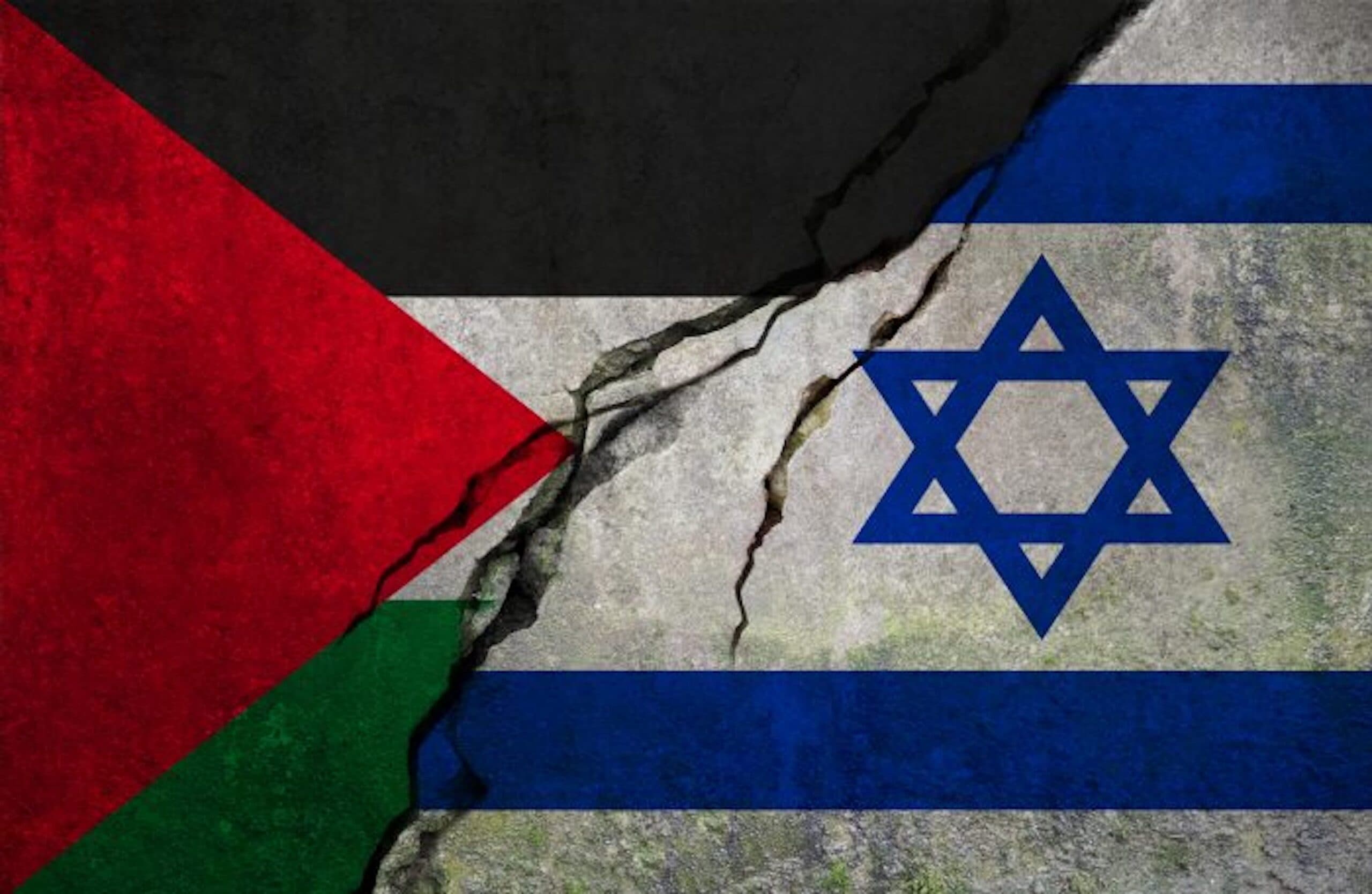
World Affairs & Geopolitics · Conflict & Security
Israel-Palestine Conflict
ConflictOngoingSince 1948
A live assessment of how this issue works in practice—institutions, tradeoffs, and what would improve outcomes. Evidence accumulates in our Summa.
Key entities
People, governments, and organizations that shape Israel-Palestine Conflict in our coverage—drawn from tagged articles and editorial catalog.
Background
Long-standing territorial and national conflict between Israelis and Palestinians
Why this remains an issue
- Conflict persists despite multiple peace process attempts
- Both sides have legitimate claims that conflict with each other
- External actors play significant roles in sustaining or potentially resolving conflict
- Humanitarian costs continue to mount on both sides
Core fault lines
- Security vs rights: Israeli security concerns vs Palestinian self-determination
- Two-state vs one-state: separation vs integration
- Historical justice vs practical solutions: past vs future
- International intervention vs local agency: external help vs internal resolution
At a glance
Origin
Roots trace to about 1948. Long-standing territorial and national conflict between Israelis and Palestinians
Why now
Conflict persists despite multiple peace process attempts Both sides have legitimate claims that conflict with each other
What to watch next
How do we balance Israeli security with Palestinian self-determination? What political arrangements can accommodate both national aspirations?
Timeline
Significant events
How the situation evolved — an interpretive civic sequence, not a full chronology.
UN partition plan proposed
The UN General Assembly recommends partition into Jewish and Arab states with an internationalized Jerusalem, intensifying conflict over land, sovereignty, and legitimacy.
Why it mattersFrames the conflict as competing national projects with external legitimacy claims.
Source: UN Resolution 181 historical record
Israeli statehood, war, and Palestinian displacement
Israel declares independence; neighboring Arab states intervene; large-scale displacement and enduring refugee claims reshape the conflict.
Why it mattersCreates the territorial, refugee, and sovereignty legacies that still structure political claims.
Source: Historical baseline
Six-Day War and occupation
Israel captures the West Bank, Gaza, East Jerusalem, Sinai, and the Golan Heights, beginning prolonged occupation and settlement expansion.
Why it mattersShifts the conflict from mainly interstate war to occupation, settlement, security control, and self-determination.
Source: Historical baseline
Oslo Accords create interim framework
Israel and the PLO recognize each other and agree on phased Palestinian self-government, raising hopes for a two-state pathway.
Why it mattersShows diplomacy can create institutions without resolving final-status issues.
Source: Oslo agreements
Israel disengages from Gaza
Israel withdraws settlers and permanent military installations from Gaza while maintaining control over key external access points.
Why it mattersSeparates Gaza governance from the West Bank while leaving core security and sovereignty disputes unresolved.
Source: Historical baseline
Hamas takes control of Gaza
Hamas seizes control of Gaza after conflict with Fatah, producing a divided Palestinian political system.
Why it mattersCreates the governance split that complicates ceasefires, reconstruction, elections, and final-status diplomacy.
Source: Historical baseline
Snapshot
Current signals
- Conflict persists despite multiple peace process attempts
- Both sides have legitimate claims that conflict with each other
- External actors play significant roles in sustaining or potentially resolving conflict
- Humanitarian costs continue to mount on both sides
Analysis
Decision tradeoffs
- Security vs rights: Israeli security concerns vs Palestinian self-determination
- Two-state vs one-state: separation vs integration
- Historical justice vs practical solutions: past vs future
- International intervention vs local agency: external help vs internal resolution
Working view
- Both Israelis and Palestinians have legitimate national aspirations
- Security and rights are both necessary and must be balanced
- Practical solutions must address both historical grievances and current realities
- External actors can facilitate but cannot impose solutions
Deep intelligence
What could change our mind
- How do we balance Israeli security with Palestinian self-determination?
- What political arrangements can accommodate both national aspirations?
- How do we address historical grievances while building future peace?
- What role should external actors play in conflict resolution?
Related articles
Recent reporting tagged to this topic—read snapshots first, then open full analyses.