
World Affairs & Geopolitics · Conflict & Security
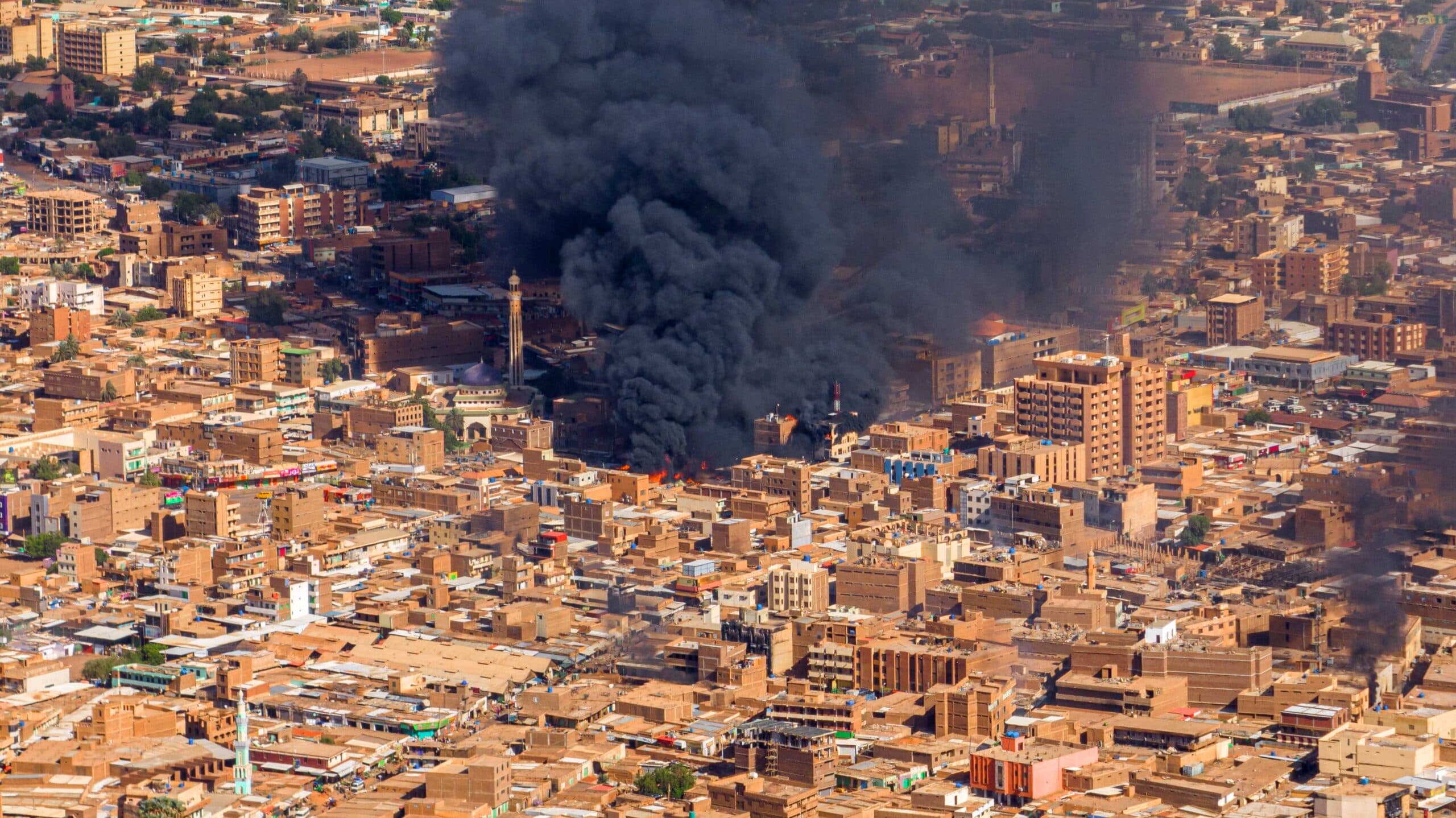
Sudan Civil War
ConflictOngoingSince 2023
A live assessment of how this issue works in practice—institutions, tradeoffs, and what would improve outcomes. Evidence accumulates in our Summa.
Key entities
People, governments, and organizations that shape Sudan Civil War in our coverage—drawn from tagged articles and editorial catalog.
Background
War between the Sudanese Armed Forces and RSF with mass displacement, famine risk, atrocities, state fragmentation, and regional proxy dynamics.
Why this remains an issue
- Sudan is experiencing one of the world’s largest displacement and humanitarian crises, with civilians bearing the overwhelming burden
- Violence in Darfur, Kordofan, Khartoum, and other regions combines battlefield struggle, ethnic violence, resource control, and local protection failures
- Humanitarian access is constrained by insecurity, obstruction, underfunding, and breakdown of basic state functions
- External and regional actors influence incentives through arms, finance, diplomacy, and competing mediation forums
Core fault lines
- Ceasefire diplomacy vs battlefield incentives
- Humanitarian neutrality vs political leverage and access negotiation
- Central authority restoration vs local armed autonomy and civilian protection
- Mediation unity vs forum fragmentation and proxy interests
At a glance
Origin
Roots trace to about 2023. War between the Sudanese Armed Forces and RSF with mass displacement, famine risk, atrocities, state fragmentation, and regional proxy dynamics.
Why now
Sudan is experiencing one of the world’s largest displacement and humanitarian crises, with civilians bearing the overwhelming burden Violence in Darfur, Kordofan, Khartoum, and other regions combines battlefield struggle, ethnic violence, resource control, and local protection failures
What to watch next
What enforcement and monitoring mechanism could make ceasefire commitments credible? How can aid corridors be protected at scale during active conflict and fragmented territorial control?
Timeline
Significant events
How the situation evolved — an interpretive civic sequence, not a full chronology.
Bashir ouster and transition hopes
Mass protests remove Omar al-Bashir and open a fragile civilian-military transition.
Why it mattersCreates a brief reform window before armed institutions reassert control.
Source: Historical baseline
Military coup halts transition
Sudan’s military leadership derails the power-sharing government, deepening distrust between armed factions and civilian actors.
Why it mattersSets up rivalry between the Sudanese Armed Forces and Rapid Support Forces as the main conflict axis.
Source: Historical baseline
SAF-RSF war erupts
Fighting between the Sudanese Armed Forces and Rapid Support Forces devastates Khartoum and spreads nationally.
Why it mattersState collapse and humanitarian catastrophe displace millions and fracture governance.
Source: Documented conflict onset
Famine and displacement warnings intensify
UN and humanitarian agencies warn of famine conditions, ethnic violence, and one of the world’s largest displacement crises.
Why it mattersShows how internal armed rivalry becomes a regional humanitarian emergency.
Source: UN humanitarian reporting
Darfur and Kordofan become central humanitarian pressure zones
Violence, displacement, siege conditions, and access constraints deepen across Darfur and Kordofan.
Why it mattersThe war’s center of gravity shifts from capital-focused fighting to regional fragmentation and civilian survival.
Source: Humanitarian reporting
Sudan war enters fourth year
The civil war enters its fourth year with no durable settlement and humanitarian agencies warning of famine, mass displacement, and severe civilian harm.
Why it mattersConfirms the crisis is no longer a short civil war but a state-fragmentation emergency.
Source: UN and humanitarian reporting
Snapshot
Current signals
- Sudan is experiencing one of the world’s largest displacement and humanitarian crises, with civilians bearing the overwhelming burden
- Violence in Darfur, Kordofan, Khartoum, and other regions combines battlefield struggle, ethnic violence, resource control, and local protection failures
- Humanitarian access is constrained by insecurity, obstruction, underfunding, and breakdown of basic state functions
- External and regional actors influence incentives through arms, finance, diplomacy, and competing mediation forums
Analysis
Decision tradeoffs
- Ceasefire diplomacy vs battlefield incentives
- Humanitarian neutrality vs political leverage and access negotiation
- Central authority restoration vs local armed autonomy and civilian protection
- Mediation unity vs forum fragmentation and proxy interests
Working view
- Humanitarian collapse is itself a regional security risk, not merely a downstream consequence of war
- Ceasefire agreements without monitoring, enforcement, and incentive alignment are unlikely to hold
- Durable settlement requires civilian political legitimacy, security-sector restructuring, protection guarantees, and regional coordination
- Aid corridors, famine prevention, and atrocity documentation should be treated as urgent parallel tracks, not postponed until final settlement
Deep intelligence
What could change our mind
- What enforcement and monitoring mechanism could make ceasefire commitments credible?
- How can aid corridors be protected at scale during active conflict and fragmented territorial control?
- Which governance model can prevent renewed military fragmentation while giving civilians real authority?
- What regional compact could reduce competitive external interference and resource-war incentives?
Related articles
Recent reporting tagged to this topic—read snapshots first, then open full analyses.