
Society & Governance
Immigration & Channel Crossings
TopicUK
Not whether post-Brexit Britain controls migration, but whether it can align visas, asylum, labour needs, housing, and social trust.
OAP view
Britain’s immigration challenge is not solved by net-migration targets alone. The durable path is high-capacity contribution-based integration: credible control over who comes and why, fast and lawful asylum decisions, visas tied to real labour and university strategy, serious housing and local-service capacity, and a civic settlement that separates integration from permanent culture war.
Thesis
The United Kingdom has moved from EU free movement to a largely points-based and sponsorship-driven system. That has increased formal control, but not necessarily public trust. Work, study, family, humanitarian, and irregular migration are now politically compressed into a single argument about borders, services, wages, and national identity.
A serious policy has to do three things at once: reduce administrative chaos, align legal migration with national capacity, and make integration measurable through earnings, English acquisition, housing, school outcomes, local trust, and citizenship.
The deeper issue is not simply high or low migration. It is whether post-Brexit Britain can build a migration system that is democratically legible, economically honest, and locally absorbable.
Key numbers
Live civic-intelligence dashboard — judge integration by measurable performance, not posture.
- Foreign-born populationRisingHigh confidence10.7M · 16%Up 34% since 2011 CensusNo fully reliable post-2021 stock estimate yetSource: Migration Observatory / Census 2021–22· Verified 2026-05
- Net migrationFallingHigh confidencedown sharply in 2025Non-EU+ net migration 350k in YE Dec 2025, down from 511k a year earlierNet migration is flow, not integrationSource: ONS, YE Dec 2025· Verified 2026-05
- Asylum claimantsRisingHigh confidence108,138 people18% more than 2023 and above 2002 peak by people includedIncludes main applicants and dependantsSource: Home Office, 2024· Verified 2026-05
- Non-UK-born mothersRisingHigh confidence34% of birthsEngland and Wales birthsDemography links migration to future population structureSource: Migration Observatory / ONS, 2024· Verified 2026-05
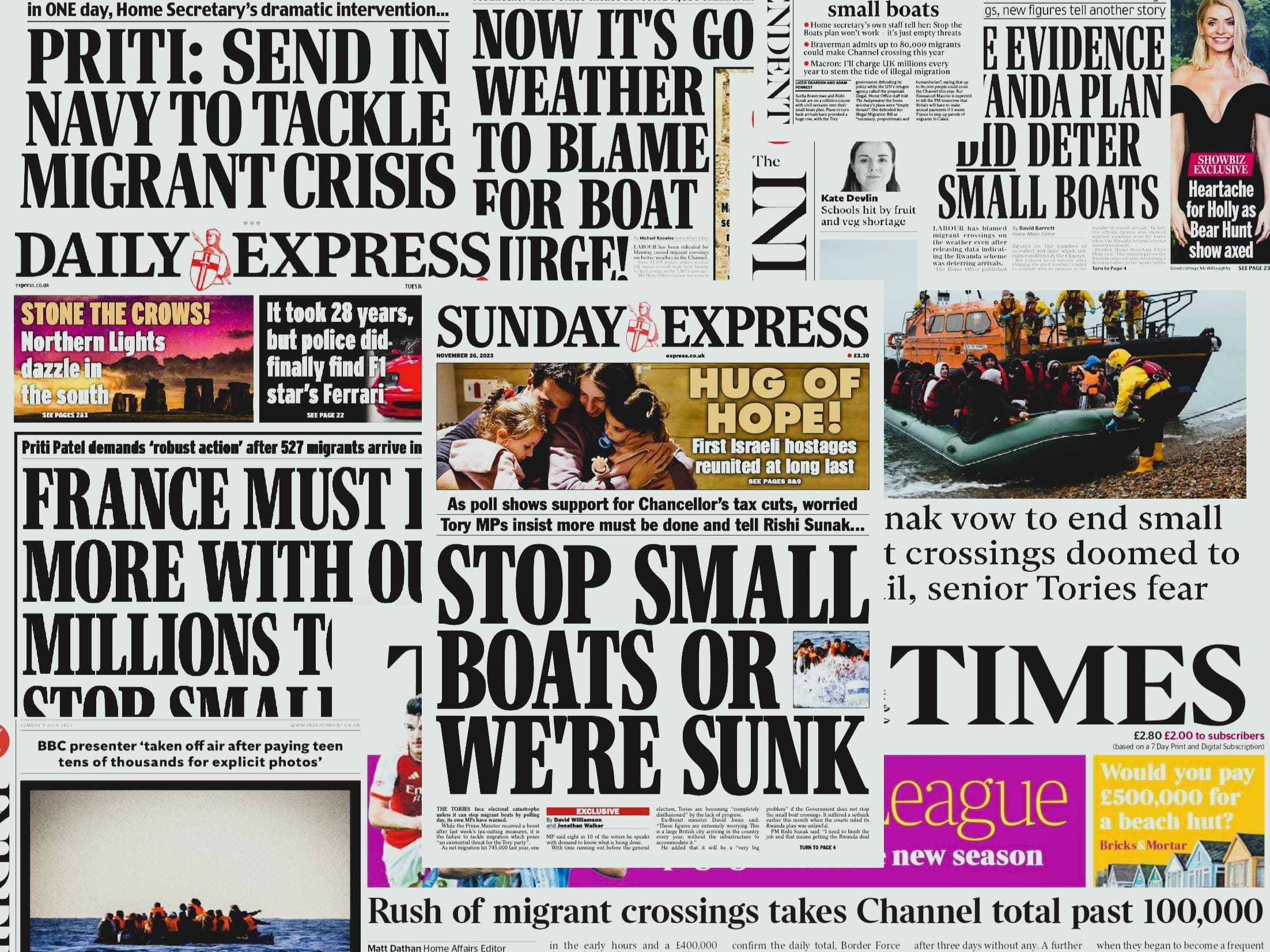
- Irregular arrivalsRisingHigh confidence44,000 in YE Mar 202514% higher than previous yearSmall boats dominate politics more than total migration volumeSource: Home Office, YE Mar 2025· Verified 2026-05
- Study and work migrationFallingHigh confidencefalling after rule changesNon-EU+ work-related arrivals fell sharply in 2025Policy changes are now visible in flowsSource: ONS / Home Office, 2025· Verified 2026-05
Definitions
Immigration debates mix categories. These terms are used consistently on this page.
- Immigrant / foreign-born
- A person born outside the country of residence; citizenship status may vary.
- Foreign national / non-citizen
- A resident who does not hold the country’s citizenship; not the same as immigrant background.
- Descendant of immigrants
- A person born in the country with one or more immigrant parents; often a citizen, not an immigrant.
- Asylum seeker
- A person requesting international protection whose claim has not yet been finally decided.
- Refugee / protection status
- A person granted protection after a legal process or admitted through a resettlement pathway.
- Regularisation / legalisation
- A pathway from irregular status to legal stay, usually under specific work, family, humanitarian, or residence conditions.
- Net migration
- The difference between long-term immigration and emigration; a headline political measure that does not show visa category, local pressure, or integration quality.
- Non-EU+ migration
- ONS category covering non-EU nationals, now the main driver of UK migration trends after Brexit.
At a glance
- 01
Scale
At the 2021/22 Census, about 10.7 million UK residents were foreign-born, around 16% of the population; the stock has likely risen since, but official post-Census estimates are uncertain.
- 02
Direction of travel
After a post-pandemic/post-Brexit surge, net migration has fallen sharply in 2025, driven by lower non-EU work and study-related inflows and higher emigration.
- 03
Why now
Asylum hotels, small boats, student dependants, care-worker visas, housing pressure, NHS staffing, and Brexit promises all collapse into one debate.
- 04
What integration should mean
Integration should mean contribution, English access, local service capacity, lawful status, school success, housing stability, and civic trust—not just lower headline net migration.
Migration types
“Immigration” is not one problem. Students, workers, family, asylum, irregular migrants, EU movers, and French-born descendants require different tools.
Skilled workers
- Scale
- Major post-Brexit channel, now tightening
- Policy problem
- Labour shortages vs salary thresholds, dependency on sponsorship, and regional needs
OAP note A contribution-based system must be honest about which sectors structurally need migration.
Health and care workers
- Scale
- Politically sensitive because care services depend on migrant labour
- Policy problem
- Low wages, exploitation risk, dependants rules, and social-care funding failures
OAP note Immigration policy cannot compensate for a broken care funding model forever.
Students
- Scale
- Large channel; policy tightened on dependants and post-study routes debated
- Policy problem
- University finances vs housing pressure and public skepticism
OAP note Students should be treated as talent strategy, not hidden permanent migration.
Asylum seekers
- Scale
- 108,138 people claimed asylum in 2024
- Policy problem
- Backlog, accommodation, hotels, appeals, and returns after refusal
OAP note Asylum hotel politics is a symptom of decision and housing capacity failure.
Irregular / small boats
- Scale
- 44,000 irregular arrivals detected in YE Mar 2025
- Policy problem
- Channel crossings, smuggling, deterrence limits, and safe-route scarcity
OAP note Visibility is high even if total numbers are smaller than legal migration.
EU nationals / settled status
- Scale
- Post-Brexit status and return migration remain important
- Policy problem
- Integration of settled residents vs declining EU inflow
OAP note Brexit changed legal control, but not Britain’s dependence on mobile labour.
British ethnic minorities / descendants
- Scale
- Citizens, not migrants, but central to integration debate
- Policy problem
- Education, labour-market gaps, housing, discrimination, and belonging
OAP note Integration policy fails when it treats citizens of migrant background as perpetual outsiders.
Data · Population and migration flows
| Signal | Latest useful figure | Why it matters |
|---|---|---|
| Foreign-born residents | 10.7M / 16% at 2021/22 Census | Baseline for UK migrant stock; later stock estimates are less reliable. |
| Net migration | Non-EU+ net migration 350k in YE Dec 2025 | Shows sharp fall after post-Brexit/post-pandemic surge. |
| Asylum claimants | 108,138 people in 2024 | Asylum is a central administrative and political pressure point. |
| Irregular arrivals | 44,000 detected in YE Mar 2025 | Small boats dominate public salience. |
Data · Integration performance indicators
| Signal | Latest useful figure | Why it matters |
|---|---|---|
| English and employment | Track migrant earnings trajectories and English proficiency | Contribution-based integration requires more than visa compliance. |
| Housing and local services | Track asylum accommodation, rental pressure, school places, GP access | Local capacity determines public trust. |
| Citizenship and settlement | Track ILR and naturalisation by cohort | Long-term membership should become civic belonging. |
| Discrimination and cohesion | Track ethnic-minority labour, school, and policing gaps | Second-generation belonging is not measured by border statistics. |
Asylum capacity
UK asylum is a capacity and housing problem as much as a legal question. Record-level claimants in 2024, accommodation shortages, hotel use, appeals, and returns have turned asylum into the visible symbol of wider state-capacity stress.
| Signal | Figure / metric | Why it matters |
|---|---|---|
| People claiming asylum | 108,138 in 2024 | Highest recent pressure by people included in applications. |
| Accommodation model | Track hotel use, dispersal, and local authority load | Public backlash concentrates where accommodation feels imposed. |
| Decision speed | Track initial decision and appeal time | Slow decisions create limbo and costs. |
| Returns after refusal | Track lawful returns by route | Credibility requires due process and consequences. |
Capacity pressures
- Home Office casework backlog
- Asylum accommodation and hotel use
- Small boat arrivals and smuggling networks
- Local-authority dispersal burden
- Appeals and legal aid capacity
Policy directionIncrease caseworker capacity, publish decision-time metrics, reduce hotel dependence through planned reception capacity, create controlled safe routes where possible, and make returns after final refusal lawful rather than performative.
What is really at stake
The visible debate
Britain argues about immigration through small boats, asylum hotels, net migration targets, NHS staffing, student dependants, and Brexit promises.
The deeper debate
The deeper question is whether post-Brexit control can become operational capacity rather than headline restriction.
The institutional test
The test is whether visa policy, labour shortages, housing, local government, asylum, and settlement can be governed as one system.
Core fault lines
Control vs contribution
Voters want lower numbers and visible control; employers and public services want workers.
OAP view
The honest settlement is contribution-based migration with transparent capacity limits.
Net migration targets vs category management
Net migration collapses students, workers, family, asylum, and emigration into one number.
OAP view
Targets are politically simple but analytically blunt.
Asylum rights vs accommodation backlash
People have protection rights, but hotel use makes state failure visible locally.
OAP view
Fast decisions and planned reception capacity are more important than slogans.
London/global Britain vs left-behind towns
Migration is economically concentrated and politically interpreted through place inequality.
OAP view
Integration is local; national policy must fund local absorption.
Multicultural citizenship vs parallel mistrust
Britain has a strong pluralist tradition, but trust weakens when housing, policing, or schools feel unfair.
OAP view
Pluralism needs equal rules and functioning services.
Outcomes
Entry numbers matter less than what happens after arrival — employment, schools, housing, discrimination, and trust.
Employment
Track migrant employment and earnings by visa route and cohort
What this meansLegal entry does not guarantee upward mobility.
Success metricHigher wage progression and less exploitative sponsorship.
English
ESOL access varies locally
What this meansLanguage support is civic infrastructure.
Success metricAccessible ESOL linked to work and settlement.
Housing
Migration interacts with national housing shortage
What this meansEven well-designed migration policy fails in a housing crisis.
Success metricLocal housing capacity embedded in migration planning.
Asylum accommodation
Hotel use and dispersal pressure drive public anger
What this meansReception failure becomes national politics.
Success metricReduce hotel reliance through planned capacity and faster decisions.
Schools and youth
Track outcomes of children with English as additional language and minority ethnic gaps
What this meansSecond-generation outcomes define integration success.
Success metricSchool outcomes converge without erasing cultural pluralism.
Citizenship
Track settlement and naturalisation by route
What this meansLong-term migrants need a civic endpoint.
Success metricClear, affordable path from contribution to membership.
Bottlenecks
Home Office
StrainVisa, asylum, enforcement, and casework credibility
Reform directionOperational dashboards, staffing, category-specific targets, and fewer policy whiplashes.
Local authorities
StrainHousing, asylum dispersal, schools, and social care
Reform directionFunding formula tied to migrant settlement and asylum accommodation.
Social care sector
StrainMigrant labour dependency and low wages
Reform directionRaise care pay and regulate sponsors rather than using visas to mask funding failure.
Universities
StrainDependence on international fees and student policy uncertainty
Reform directionSeparate education export strategy from net-migration panic.
Border Force / enforcement
StrainSmall boats and returns capacity
Reform directionTarget smuggling networks and lawful returns after final decisions.
ESOL providers
StrainLanguage demand and funding gaps
Reform directionTreat English access as integration infrastructure.
Current signals
- 1
Net migration is falling after the surge
ONS data show a sharp fall in 2025, driven by lower non-EU+ work-related migration and rule changes.
- 2
Asylum remains politically hot
Home Office figures show 108,138 people claimed asylum in 2024, a record by people included in applications.
- 3
Small boats remain high salience
Irregular arrivals are much smaller than legal migration but far more visible and politically potent.
- 4
Care and universities expose policy contradictions
Britain wants lower migration but has sectors whose operating models depend on migrant workers and students.
Policy options
Compare approaches by upside, risk, and who bears the cost — not by slogan.
| Option | Upside | Risk | Who benefits | Who bears cost | OAP assessment |
|---|---|---|---|---|---|
| Strict net-migration cap | Simple political accountability | Damages universities, care, NHS, and labour markets while failing to distinguish categories | Politicians promising visible control | Public services, employers, students, local economies | Too blunt unless broken into category-specific capacity management. |
| Liberal post-Brexit migration | Supports growth, universities, and care | Housing and local trust collapse if capacity is ignored | Employers, universities, migrants | High-pressure towns, renters, local services | Contribution without local capacity is politically unstable. |
| Asylum deterrence-first model | Signals control over small boats | Legal challenges, high costs, and unresolved backlog/accommodation pressures | Restrictionist politics | Applicants, courts, local authorities, credibility | Deterrence cannot substitute for decision capacity. |
| High-capacity contribution integration (OAP preferred) | Aligns visas, labour, asylum, housing, English, and settlement | Requires joined-up government and honest sectoral tradeoffs | Workers, public services, local authorities, civic trust | Actors invested in net-migration theatre | Preferred: category management + local capacity + fast asylum + fair contribution rules. |
Who opposes this
A serious package must name resistance—not pretend consensus exists.
Migration-reduction voters
Likely objectionThis still accepts too much migration.
OAP response
Lower numbers without labour and housing strategy produces hidden shortages and service failure.
Employers / universities
Likely objectionControls reduce competitiveness.
OAP response
Public consent requires visible contribution and local capacity, not just institutional demand.
Asylum advocates
Likely objectionReturns and deterrence language endangers rights.
OAP response
Fair protection depends on fast decisions and lawful consequences, not endless limbo.
Local authorities
Likely objectionNational government controls visas but councils absorb costs.
OAP response
That is the central design flaw: funding must follow settlement and accommodation.
OAP package
High-capacity contribution integration
Not net-migration theatre. Not labour-market denial. Not asylum hotels forever.
A serious UK model manages categories separately and judges success by contribution, local capacity, decision speed, and civic trust.
- 1
Category-specific migration control
Main blockerPolitical addiction to headline targets.
Stop pretending one net-migration number can govern all migration.
- Separate work, study, family, asylum, and humanitarian targets
- Publish route-level outcomes
- Tie visas to local and sectoral capacity
- 2
Fast asylum decisions and planned reception
Main blockerCasework capacity, accommodation shortages, and appeals backlog.
Replace hotel crisis with throughput and reception planning.
- More caseworkers and legal triage
- Regional reception capacity
- Reduce hotel reliance
- Lawful returns after final refusal
- 3
Care-sector migration with wage reform
Main blockerFiscal cost of care reform.
Do not use migrant labour to avoid fixing social care.
- Raise care pay and regulate sponsors
- Protect workers from debt bondage
- Link visas to inspected employers
- 4
Local integration capacity formula
Main blockerTreasury resistance and local data gaps.
Funding should follow settlement pressure.
- Funding for schools, ESOL, housing, GP access
- Settlement dashboards by local authority
- Early support for high-pressure areas
- 5
Civic settlement and citizenship
Main blockerFees, bureaucracy, and political suspicion.
Make long-term contribution lead to stable membership.
- Clearer settlement pathways
- Affordable citizenship and ESOL support
- Anti-discrimination enforcement
Not this
- Single net-migration target as whole policy
- Asylum hotels as permanent system
- Care visas without care reform
- Universities as hidden migration policy
- Pluralism without local-service capacity
OAP working view
Britain should move from headline net-migration politics to contribution-and-capacity politics.
Judge success by route-level outcomes: asylum decision time, worker wage progression, sponsor compliance, ESOL access, local housing pressure, school capacity, settlement, and citizenship. The strongest approach is high-capacity contribution integration: legal control, local absorption, fast asylum, fair work, and civic membership.
The central failure mode is pretending post-Brexit control automatically creates capacity. The opposite failure mode is pretending employers and universities can set migration policy without democratic consent.
Policy performance dashboard
What good looks like vs failure mode — by policy area.
| Policy area | What good would look like | Failure mode |
|---|---|---|
| Route management | Work, study, family, asylum and humanitarian routes managed separately | Net-migration theatre |
| Asylum | Fast, lawful decisions and planned reception | Hotels, limbo, and backlash |
| Work visas | Needed labour with wage and sponsor protection | Exploitation and sector dependency |
| Universities | Education export strategy with honest settlement rules | Student policy used as migration panic valve |
| Local integration | Funding for ESOL, schools, housing and health follows settlement | Councils absorb national choices without resources |
What we would watch next
- 1
ONS net migration revisions
Watch whether the fall continues and which categories drive it.
- 2
Asylum accommodation
Hotel use, dispersal pressure, and processing speed are the trust metrics.
- 3
Care worker route reforms
Whether lower inflows are matched by wage and funding reform.
- 4
University finances
International student policy interacts with higher education solvency.
- 5
Local cohesion indicators
ESOL access, school outcomes, housing pressure, and hate-crime trends.
Mind changers
Specific measurable indicators — not vibes.
More optimistic if
- Asylum initial decision backlog falls without rising successful appeals due to poor quality
- Care-sector sponsor abuse falls while vacancy rates do not spike
- ESOL and local settlement funding increases in high-pressure areas
- Net-migration fall is achieved without damaging NHS/care/university capacity
More pessimistic if
- Asylum hotels remain high while rhetoric focuses on deterrence
- Care shortages worsen after visa tightening without wage reform
- Universities face instability due to student-migration panic
- Local authorities report worsening service pressure without funding
OAP scorecard
- Integration capacity6/10
Strong civic pluralism and labour absorption, but housing, asylum accommodation, ESOL and local services are strained.
- Evidence confidence7/10
ONS, Home Office, Migration Observatory and parliamentary data are strong, though post-Census migrant stock estimates remain uncertain.
- Political temperature9/10
Immigration is central to post-Brexit legitimacy and party competition.
- Institutional stress8/10
Home Office, asylum accommodation, local authorities, universities and care sector are under pressure.
- Policy solvability6/10
Route-level reforms are feasible but require fiscal honesty on housing, care and councils.
- Performance-measurement readiness6/10
Data exists but is not organized into a public route-and-local-capacity dashboard.
Related articles
Recent reporting tagged to this topic—read snapshots first, then open full analyses.